

The way organizations store, access, and manage their data and applications has been completely transformed by cloud computing. It has evolved from a specialized technology to a widely used solution that is embraced by companies of all kinds. However, what is cloud computing really, and how can it help your company?
Understanding the Cloud
To put it simply, cloud computing is the online provision of on-demand computer services, such as servers, storage, databases, networking, software, analytics, and intelligence. It removes the requirement for companies to make capital expenditures for and manage their own physical infrastructure.
Imagine having access to an enormous amount of computer power at your disposal, from any location with an internet connection. That’s what cloud computing is all about!
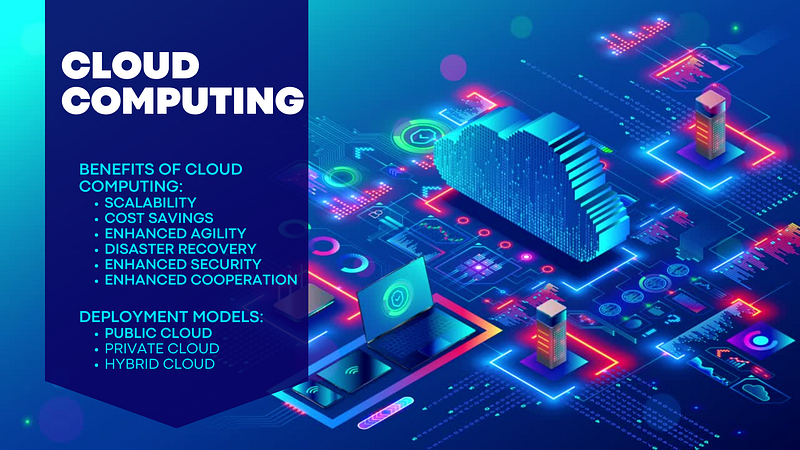
Benefits of Cloud Computing
There are several benefits that cloud computing provides to organizations, such as:
Cost savings: The initial expenses associated with buying and maintaining physical gear are removed with cloud computing. Businesses also save a lot of money since they only pay for the resources they really utilize.
Scalability: You may simply scale up or down cloud resources to meet your business’s demands. This enables companies to adjust to changes in demand without having to make large financial commitments.
Enhanced Agility: Businesses can now deploy infrastructure and apps more rapidly and effectively thanks to cloud computing. Time-to-market and innovation are accelerated as a result.
Enhanced Security: To protect your data, cloud companies make significant investments in security protocols. Furthermore, cloud-based resources are accessible from any location, removing the possibility of data loss as a result of local catastrophes or device malfunctions.
Enhanced Cooperation: Regardless of location, cloud computing enables smooth team communication. Teams may collaborate in real time with cloud-based data and apps.
Upgrades that happen automatically: Software and security upgrades are managed by cloud providers, guaranteeing you always have access to the newest features and security fixes. Your IT personnel may now concentrate on more strategic projects as a result of this.
Disaster Recovery: Robust solutions for disaster recovery are provided by cloud computing. Your data is safely backed up on the cloud, guaranteeing company continuity in the event of calamities or blackouts.
Deployment Models
Different deployment models are available for cloud computing services to meet different business requirements:
Public Cloud: Cloud service companies such as Google Cloud Platform (GCP), Microsoft Azure, and Amazon Web Services (AWS) provide public cloud services. These services provide the greatest scalability and cost savings because they are shared by several consumers.
Private Cloud: A private cloud is a cloud environment that is exclusively used by one company. Although it is more expensive, it offers the highest level of security and control.
Hybrid Cloud: A hybrid cloud integrates private and public cloud infrastructures. This enables companies to keep control over sensitive data in the private cloud while utilizing the economic advantages of the public cloud for particular workloads.
Conclusion
For companies of all sizes, cloud computing presents an attractive value proposition. Businesses may improve security and collaboration while gaining more agility, scalability, and cost-effectiveness by using the cloud. Cloud computing will surely become increasingly more important in determining how businesses operate in the future as it develops.