

Stranger Things has held a special place in my heart since it aired in 2016. Call it nostalgia for the '80s movies I grew up watching or my love of Spielberg and King-esque narratives. No matter the deep-seated reason behind my appreciation, I enjoyed Stranger Things for its world building and likeable characters. But the series is far from faultless. What follows is a critique of the series one season at a time with a look at how each connects to its predecessors. I share everything from my favorite elements to the most egregious writing decisions. As you'd imagine, a plethora of spoilers abound.
Season 1: The Vanishing of Will Byers
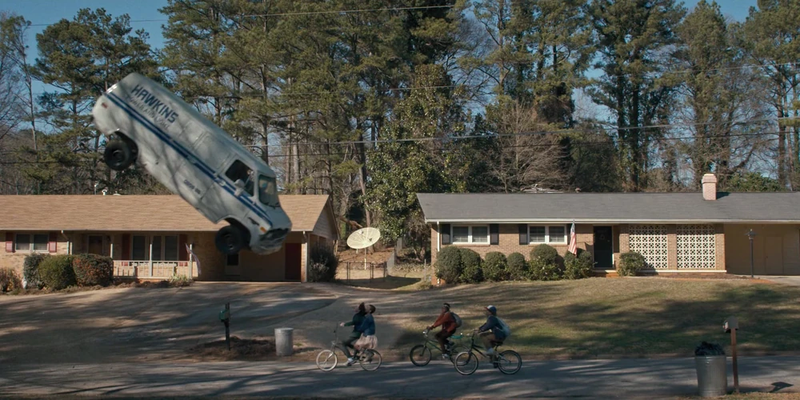
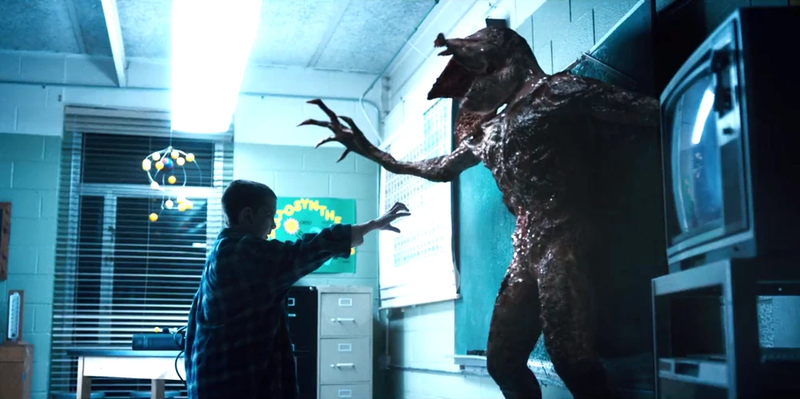
Without previous seasons to stay consistent with, season one provides a tight-knit narrative centered around the disappearance of Will Byers and the questionable experiments done within the confines of Hawkins National Laboratory (HNL). On the surface, season one is an homage to Spielberg and Stephen King films from the '80s, particularly E.T. and Firestarter. Secret government experiments, a monster lurking in the shadows of Hawkins, another world creeping into ours, and Eleven's pscionic powers are all part of its nostalgic charm. While the Duffer Brothers weren't subtle with their inspirational nods, the inclusion of these elements doesn't detract from the story. Instead, it offers viewers familiar storylines while providing original twists on the genre's tropes. The best part about this season is that it's a well-contained story. Will is found, El vanishes with the demogorgon, and the kids get back to their routine. The government is contained within Hawkins, making the story feel simultaneously quaint and important. While danger is imminent, it leans more into the sci-fi elements than the large-scale stakes included in later seasons.
 The Good
Stranger Things works so well because the characters are believable, three dimensional, and varied. The kids and their varying degrees of chemistry feel honest and genuine, bringing a down-to-earth, underdog vibe stripped straight from films like The Goonies and Stand By Me. After Will goes missing, Mike, Dustin, and Lucas go against Hopper's orders and search for him. They stumble into Eleven in the woods. No matter how many dangers are stacked against them, they're willing to put themselves at risk to find Will and save Eleven.
Hopper is one of the strongest and most compelling characters. His trauma plays into what transpires, his guilt and grief fueling his need to find Will (and later Jane). When we meet him, he's a grizzled cop with a drinking problem and a poor attitude, but he soon becomes a hero. Once he realizes something's off about Will's disappearance, and he picks up Eleven's trail, he refuses to give up until he can bring Will back to Joyce.
Despite what many people say, Steve is never an asshole; his reactions, while occasionally dickish, aren't overblown. When his friends make fun of Jonathan, he doesn't participate, actively discouraging it. He had every right to think Jonathan was a creep and feel betrayed when he saw him and Nancy alone in her room. He didn't spray paint the building or the marquis but allowed it to happen, only finding a backbone after he takes a beating from Jonathan. Steve is far from a role model, but it's evident that he cares deeply for Nancy.
The attention to detail is also top notch. El's gown is ripped when we meet her, and later Mr. Clark finds the same fabric at the mouth of a drainpipe. The Wheelers have always had marital strife; Ted sleeps on the L-A-Z Boy, as Mike mentions to Eleven, providing a glimpse into their troubles and what unfolds in later seasons. The flea and the acrobat analogy is also cool and gives the kids (and the audience) a quick rundown of how the Upside Down functions.
 The Lacking
Eleven is about as fleshed out as E.T. Her guilt and fear regarding the gate and the demogorgon are believable, but there's little to her personality outside of "kid with telekinetic capabilities". Though she and Mike are cute together, she isn't as compelling as the kids who take her in.
Jonathan, compared to Steve, is a void. Sure, he's worried about his brother, but his search for Will is interrupted by his impromptu photo shoot, muddying his motivations.
Ticking clock sounds were added to Eleven's scenes in the void since the last time I rewatched the series, and I never take kindly to retroactively adding material to cover up a lack of foresight.
 Series Consistencies
Season one drops hints for future seasons to flesh out. The most prominent is Will's queerness. Lonnie, Will's deadbeat dad, used to call him a fag, but this could have easily been Lonnie being a jerk because he didn't understand Will and his interests. The gun is missing from the shed when Hopper investigates (Will has it in the Upside Down in the flashback from season five). Hopper's blue bracelet was initially his daughter's, and it can be seen in every season, moving from him to El and back again. In the last scenes of season one, El and Hopper's blooming relationship is hinted at and Will spits out a tentacle-like glob that likely becomes Dart in season two.
Series Questions
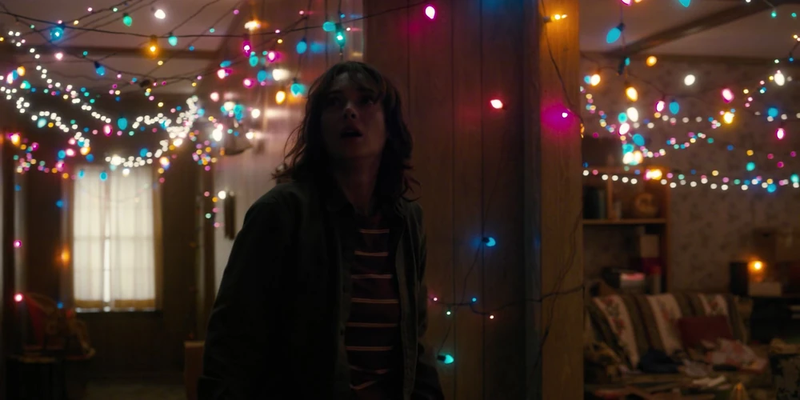
How does the demogorgon telepathically open the Byers' lock when we know they have no psionic powers? How does Eleven know Will is missing just by looking at their AV Club photo? Joyce paints letters on the wall under Christmas lights so Will can communicate with her, yet we know that the Upside Down is not affected by what's happening in the present. Only what existed in Hawkins the day Will went missing is mirrored in the Upside Down. With that logic, Will wouldn't have been able to talk to Joyce because the letters would be absent; he also wouldn't have been able to trigger the lights intentionally unless he knew they were there (like Dustin does with the teens in season four).
Overall, season one is solid. The issues that stem from this season are only problematic because of what comes after. If Stranger Things were a limited series, there would be no plot holes or inconsistencies to speak of.
Season 2: The Mind Flayer
Season two is set just before the anniversary of Will's disappearance. Will gets visions of the Mind Flayer and stands up to it after Bob gives him naive advice. What follows is a possession that isn't convincing because Noah Schnapp isn't a strong actor. The season also tackles trauma, parenthood, and adolescent angst. While I love the addition of Max and Billy, the writing for this season is sloppy, Will's focus is unearned and uninteresting, and the major plot beats are plucked straight from '80s horror movies. While season one weaved sci-fi elements into the script, season two leaned too much on trope recognition.
 The Good
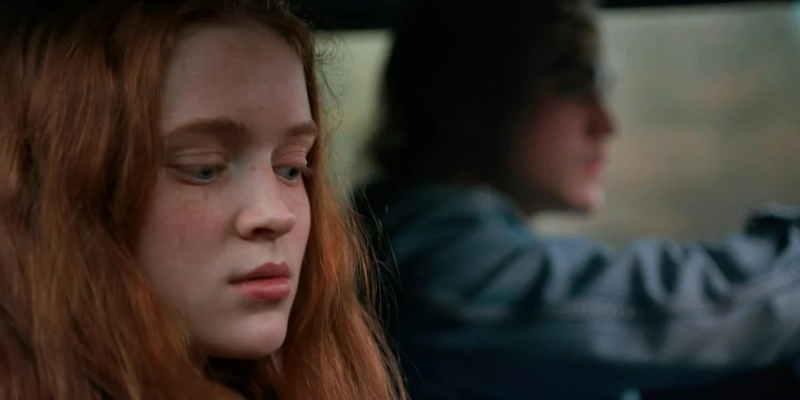
Max and Billy offer a lot to the season and series as a whole. Max is a perfect counter to Mike's bullshit. She isn't afraid to ask questions or poke Mike when he's being a dick. Billy provides an antagonistic air that is believable and more nuanced than Steve's ex-friends. Billy and his dad's interaction provides much-needed context; he's sad and angry and takes it out on Max. Not great but understandable. It's also possible that Billy's racism stems from his father and not himself, given his dad's opinion on women and the way he dresses. When Billy shows up to the Byers' house and sees Steve, he's pissed and potentially protective of Max; seeing her with a much older dude wasn't what he expected. When Max stands up to him, their relationship irrevocably changes.
Hopper and El becoming a family is handled with care. Love is there, and you can see the hurt in Hop's demeanor when he disappoints her. The relationship is exactly what they both needed. Hopper never stopped grieving for his daughter, and while El isn't a replacement, she fills an emptiness that nothing else ever could. El, being stripped from her mother at birth and never receiving affection from an adult figure outside of Dr. Brenner's complicated warmth, deserved a family.
Bob Newby, Dr. Sam Owens, and Murray Bauman are positive additions. Bob is a down-to-earth, nerdy guy who treats Joyce well and accepts Will and Jonathan as they are. It's a shame he died so early in the series. Dr. Owens is focused on keeping the Upside Down contained and caring for Will. While he isn't perfect, and his role as the head of HNL means he's pressured by his colleagues to prioritize the burn over Will's well being, he refuses to compromise his values. Murray provides welcome comedic relief. He's abrasive and opinionated but with the pure intention of taking HNL down for Barb's death.
Steve's growth this season is great. We see a blooming friendship between him and Dustin that begins with a need for Steve's muscle. What follows is a candid conversation about girls and a soft spot for the kids that Steve hadn't been offered in season one. He proves a "pretty damn good babysitter" and stands up for Max and Lucas when Billy shows up at the Byers'. His relationship with Nancy is falling apart, and instead of getting mad, he accepts the fact that they're in different places and Nancy has chosen Jonathan over him. He's not happy about this turn of events but resigns himself to the new reality. It's hard not to root for him.
El meets her mother and learns what happened to her. This is a pivotal moment in El's arc, one that's necessary to flesh her out into a full-fledged person with depth and history. What's annoying about her visit to her mother's house is the repetitive nature of what she shares with El in the void.
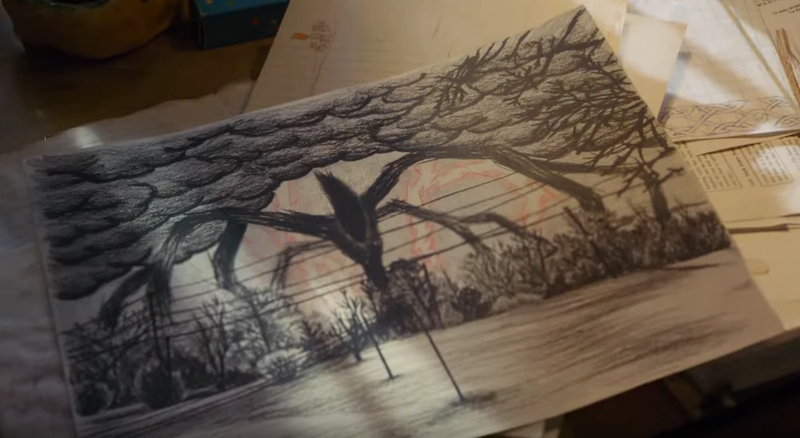
Will's possession is fascinating, concluding with a plume of black mist expelling from his body and lifting into the night sky that showcases the shift in tone from seasons two and three.
The inclusion of the snow ball. Max and Lucas share a kiss, solidifying their bond and cutting the remaining tension between Dustin and Lucas. El and Mike get to see each other, properly, for the first time since the day she vanished in season one.
The Ghostbusters costumes are perfect for our young protagonists and nod to their history with otherworldly creatures. Dustin's reaction when he notices no one else at school dressed up for the occasion is pure gold and a kid's social nightmare. Once again, they're the freaks.
 The Lacking and Terrible
"The Lost Sister" episode is the weakest of the series. It was included to give Eleven agency and highlight Dr. Brenner's other test subjects, but it doesn't connect with the rest of the season or the series as a whole. Kali is awful. She and her punk posse are cliches, a PG-13 version of what punk vigilantes would actually look like. She is also manipulative, scaring El with visions of Papa. As a viewer, we're meant to connect with her on some level, yet she's impossible to trust.
Mike is obnoxious. While it's understandable that he's grieving for El and doesn't want anyone to replace her in the party, he treats Max like garbage and excludes her whenever he gets the opportunity. Mike's never been the strongest character, but this season it's apparent that he's the leader because he's the most vocal and opinionated of the group.
Dart. After the crazy year they had in season one, wouldn't Dustin be more cautious of a new species? Why didn't he change his attitude after Will said he'd heard Dart in his vision? Sure, Dustin's the most inquisitive, but his sheer lack of critical thinking at the first sight of Dart doesn't gel with the character we've come to know. Despite not making sense, Dart is kinda cute. His bond with Dustin spans species and hive mind demands, meaning a familial connection is possible between human and demogorgon.
Nancy and Jonathan have chemistry but aren't as dynamic or interesting as she and Steve. She waited for Jonathan for a month before getting back with Steve, though that isn't hinted at until she says something in their hotel room. As a result, their relationship and character arcs are flat, as if the writers didn't know how to portray their connection and simmering attraction from one episode to the next. Steve deserved better than Nancy, who saw their relationship as "bullshit" and said they were acting "like they were in love". If she wanted to be with Jonathan since they connected in season one, she never should have strung Steve along.
Will's "now memories". Him being a spy is fascinating, but the name of this power is stupid and juvenile, even for a thirteen-year-old.
 Series Consistencies
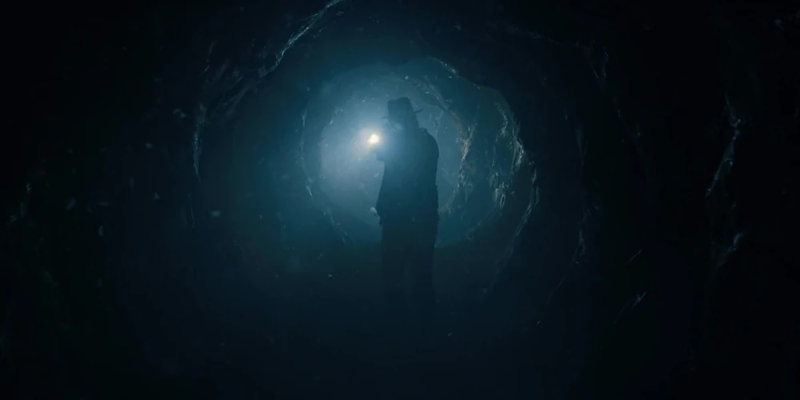
Barb's parents find peace after Murray goes public with Nancy's and Jonathan's story. Hawkins National Laboratory, as a result, is shuttered. Max and Billy have an understanding. Steve is heartbroken about Nancy but tries to move on.
Series Questions
How did Owens and his team not look in Nancy's bag for the recorder when they bring her and Jonathan in for a chat? That's an egregious oversight for a government outfit. Hopper adopts El, making it possible for her to be somewhat visible in Hawkins. How many people know he has an adopted daughter in season three (Karen must know Mike has a girlfriend and El spends the night at Max's)? Kali's power is interesting but makes zero sense in the context of the series. Why is her power different than all the other kids'? Why doesn't Henry/the Mind Flayer tap into Will in later seasons? When did the rainbow room shift from a closet-like space to a full-fledged rec room? How do the tunnels work in the grand scheme of things? Is it enough to dig until you reach the bridged dimension?
Season 3: E Pluribus Unum
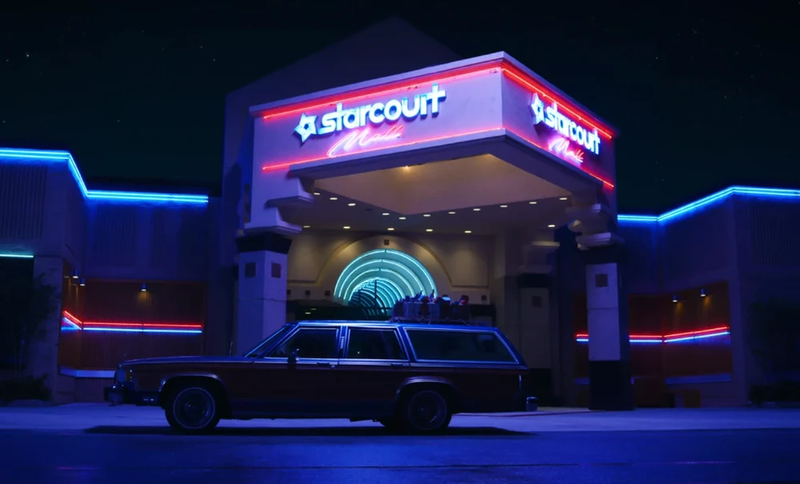
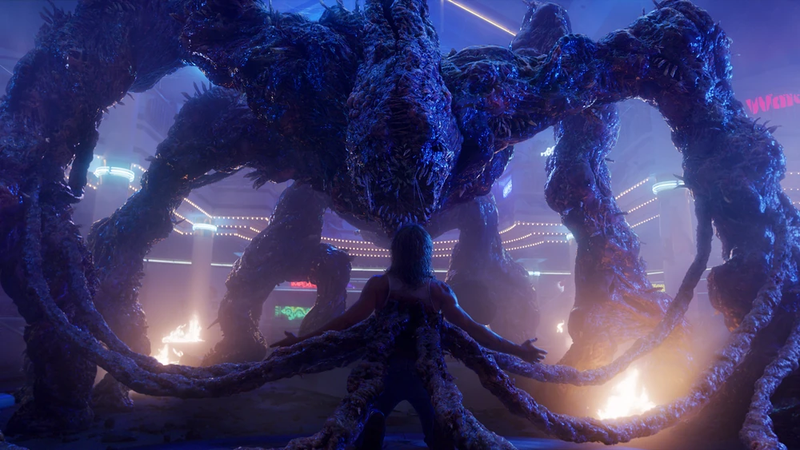
The funniest and most gnarly volume, season three is by far the best ride. It's the summer before high school and Hawkins has a new mall. The Mind Flayer is back, the part of it that Will expelled in season two taking root in the abandoned Brimborn Steel Works and slowly absorbing Hawkins residents. The party feels like a group of teenagers, Will isn't in imminent danger, and there's a lot more comedy injected into each episode. The neon lights and general cheeriness of the Starcourt Mall juxtaposes the eerie, nightmarish, and grotesque doings of the Mind Flayer, giving this season a different feel from the rest that delivers on entertainment, character development, and lore.
 The Good
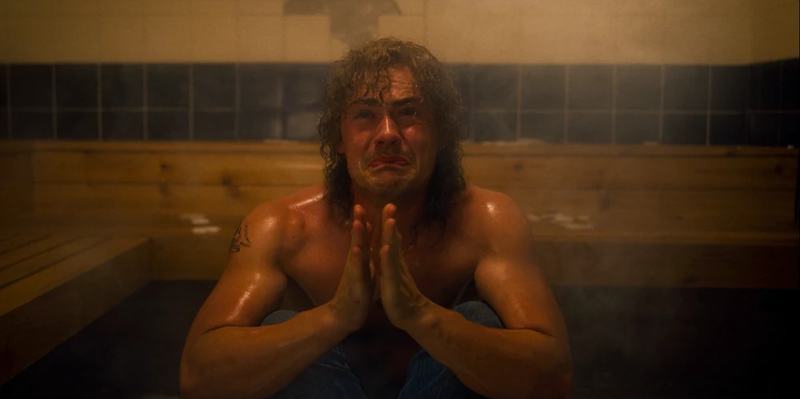
Billy being flayed and succumbing to the Mind Flayer's power is one of the best aspects of this season. He is constantly struggling against the Mind Flayer, the conflict most prominent in "The Sauna Test". The turmoil and pain is written across his face, seen in the tension of his muscles, and portrayed beautifully. When he's speaking for the Mind Flayer in later episodes, he's terrifying, smiling and moving uncharacteristically, fully embodying the Mind Flayer's personality. El taps into Billy's mind and witnesses a few of his memories. This glimpse into his head provides us with more context, showcasing his favorite memory and the bad ones that came soon after. He's partially redeemed when he steps between El and the Mind Flayer.
Max's reaction to Billy is powerful and nuanced. She doesn't want him to be the chosen vessel, audibly hoping that it isn't him. When he's in the sauna, they have a heart-wrenching discussion where he says he didn't mean to hurt anyone, but it made him do it. Max, in tears, is sympathetic and wants to help him. When he dies saving El, she's distraught. This grief carries over into season four and sets up the latter half of her arc.
Hopper's feelings about Mike's and El's relationship are realistic and deserved; he's protective and doesn't love the constant hanging out and kissing. His relationship with El is strained this season but comes full circle. Hopper's letter, and his assumed death, is one of the strongest elements of this season because El learns how much Hopper loved her and wished to hold on to her, despite her getting older.
The Mind Flayer is much scarier in the flesh, its mouth a gnarled mess. When it comes through the cabin's roof and bites into El, it's the first really solid threat. Relatedly, the melting and absorption of people is gross and awesome. The scenes with Jonathan and Nancy in the hospital are peak body horror.
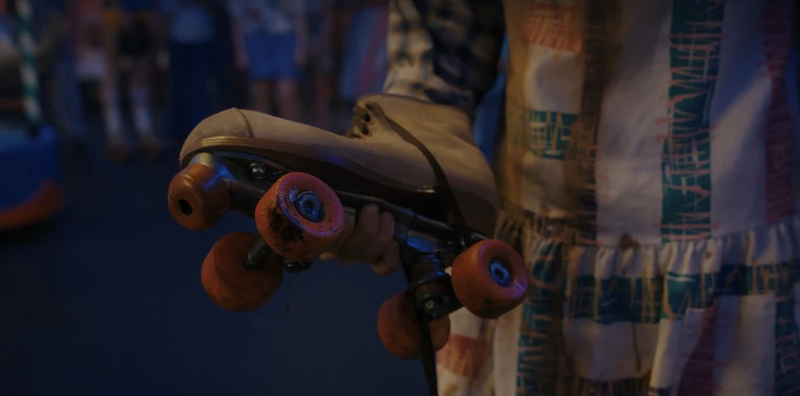
Starcourt Mall is a cool venue that brings about a lot of nostalgia, particularly for anyone who spent a good part of their teen years in a mall (like I did). The firework showdown is vibrant, once again juxtaposing the brightness with the Mind Flayer's darkness.
Will being upset about Mike and Lucas having girlfriends and ruining what he appreciates most (roleplaying and hanging out with friends) is raw and realistic. At this stage of the series, it's unclear whether Will is asexual or gay. He seems uninterested in anyone romantically, and what he believed would stay consistent has been threatened. During the summer between middle school and high school, many kids change. It's appropriate for Will to feel blindsided by the shift.
Joyce and Hopper become something more than worried adults, and their relationship is tumultuous and entertaining. It's hard not to root for their Enzo's date.
Karen and the other moms are thirsty for Billy, a funny but not out-of-the-question look at bored housewives. Karen feels unseen and unappreciated by Ted yet can't follow through with her planned hookup with Billy. It says a lot about Karen and what she believes is important. She places family over everything else, and that's always been a clear character trait.
When it comes to new characters, Robin and Erica are wonderful. Robin is quirky and plays off Steve really well. When it's revealed that she likes women, her growing connection with Steve deepens. Erica adds a ton of sass and regularly insists she's not a nerd. Her strong personality is appreciated beside Dustin's know-it-all tendencies and Robin's and Steve's curiosity. Suzie is also a good inclusion, especially given everyone believes Dustin made her up until he connects with her over Cerebro and they sing The NeverEnding Story theme.
 The Lacking
Will's sensitivity to the Mind Flayer (his spidey sense) overstays its welcome. It's a convenient way for him to contribute without placing him in harm's way.
The Russian base beneath the mall is highly implausible. Mayor Kline adds a layer of mystery to Hawkins' commerce and vaguely mentions his participation in the mall's planning but doesn't provide the season with much more than corruption and drama.
Mr. Terminator is cliched and obnoxious. Alexei isn't fleshed out enough, rendering his murder empty.
It would have been much cooler if the Russian code wasn't clear to us until Robin cracked it. Having it translated from the beginning gives us a strong advantage over the protagonists and strips it of its mystery.
Hopper should have died. The machine's rays disintegrate people in a matter of seconds, yet somehow Hopper jumped out of the way and survived the blast when men in suits didn't. Logically, it makes no sense. His false death, hinted at in the post-credits scene of the final episode, cuts the emotional significance of the letter he wrote El.
 Series Consistencies
This season sets up Max's grief and depression. Without her complicated relationship with Billy, what unfolds in season four wouldn't be nearly as powerful. El's lost her powers. The Byers family and El move away. Hopper is presumed dead. Steve and Robin get a job at the video store. The Hawkins news lists the major conspiracies and deaths of the town and nods to Dungeons & Dragons and the Satanic Panic.
Series Questions
Why does the bite strip El of her powers? In season four, it's noted that trauma set her back the first time. Are we meant to believe the Mind Flayer bite is just as traumatic as witnessing the massacre at Hawkins Lab?
Season 4: Vecna's Curse
This season is the biggest in scope, the locations spanning continents (and other dimensions) and the world and lore becoming more defined. In Hawkins, kids are being killed by an unknown source, their bodies broken beyond what a man could reasonably do with his bare hands. In Lenora, El is bullied and Joyce receives a Russian doll in the mail with what looks like a ransom note. In Russia, Hopper is a prisoner hoping to escape. My favorite scene comes from the fourth episode, "Dear Billy". While this season isn't perfect, it attempts to tie together Hawkins National Laboratory, the Mind Flayer, and Eleven's pivotal role in what transpired in November 1983.
 The Good
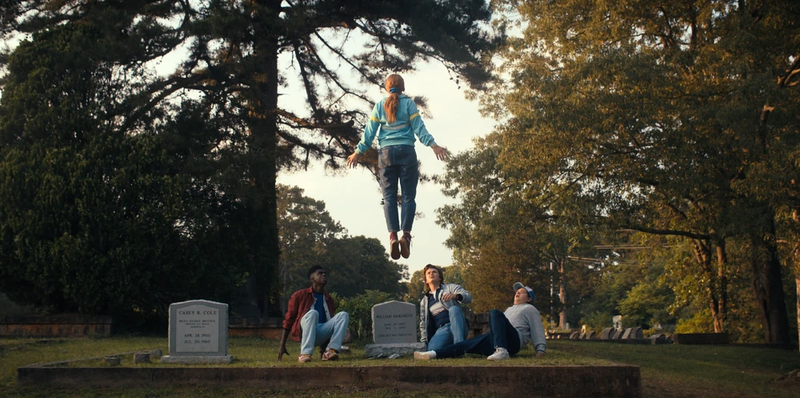
Max's plot line is the most effective. Her guilt about Billy, her distancing herself from the group, and her wish for another start are all excellent. The best scene of the season is the last section in "Dear Billy". There's so much tension from inside her head and in the graveyard. Her survival isn't guaranteed. And I will forever associate Kate Bush with this heart-pounding moment.
Henry is manipulative but captivating. His backstory lacks emotion, his plan nothing more than a means to an end. As far as villains go, he's like a serial killer with no remorse and an unhinged reason behind his actions. He's more frightening than the Mind Flayer. His mannerisms are the same as Billy's while he was under the influence of the Mind Flayer, hinting at the connection between Henry and the Mind Flayer (though this gets messy in season five).
Dr. Brenner (Papa) is a multi-faceted character. Before this season, we know little about him and his intentions. This season, we get a sense that he truly cared for the children in his care—even if his care was flawed and necessary for his research. His love for Henry, even after everything he'd done, proves that he saw the children as family as well as an obligation. His death, and El's acceptance of his passing, brings their arc to a satisfying close.
Relating to new characters: Angela and her friends are awful. She deserved to get shmacked. Argyle is a fun sidekick that never stopped providing good lines. Jason is grief stricken and uses his charismatic personality to pull together a search party. He's intense but relatable. Eddie has a full, satisfying arc—but, like Steve says later, he died because he made a poor decision. He didn't need to run into the swarm of bats. He didn't need to play the hero.
Steve's admission to Nancy is sweet and only proves that he never stopped loving her. There's romantic tension between them, but it's only offered as a contrast to her waning feelings for Jonathan. I particularly enjoyed his dream of one day having "six little nuggets".
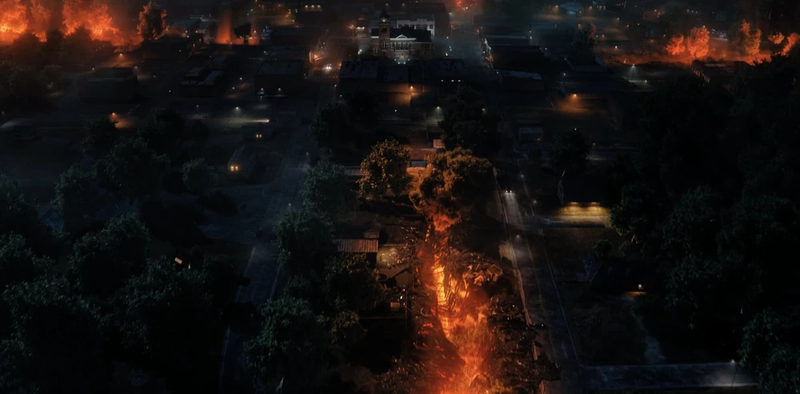
When Hawkins splits after Max's death, the tension is at its peak. The party has lost. The world, not just Hawkins, is at stake.
 The Lacking
Mike and El express their love for each other in season three, but Mike refuses to say he loves her when she points out he doesn't say it anymore. Why won't Mike use the words when he can see it's important to El to hear them? Why does he wait until she's fighting Vecna to find the courage to say what's been said before?
Will tells Mike that he's the heart of the party. While Mike is generally the leader of the group, he's never been an unwavering presence. He's prone to mood swings, cares more about El than the friends he's had since elementary school, and often chokes when he's asked to deliver on something that makes him uncomfortable. I can accept that Will is closest to Mike and that he believes he's the strongest of all of them, but this season seemed to force a title on Mike that he didn't deserve.
Will being upset by the distance between him and Mike is raw and heartfelt. But using his emotional scenes as proof that he's gay makes his feelings more about sexuality than strong bonds. It would have been far more poignant if it turned out Will was asexual. The evidence for asexuality is there: he feels disconnected from the group when everyone else gets girlfriends, he misses his best friend, and he wants to play D&D with the party forever. I have no issue with Will being gay; my main gripe is that signs of asexuality were stronger than the gay undertones the writers were going for.
Steve is dumbed down for comedic relief and it doesn't work. Steve's never been the brightest, but this season he struggles to understand easy-to-grok information.
Vecna's kills should have been more practical.
The Nina Project is fascinating but proves a slow, exposition-heavy way of getting El's powers back. Why couldn't Papa just tell her what happened? Why did she need to relive the massacre and believe she killed the kids in order to heal?
The Russian side quest is unnecessary and only mildly entertaining. It would have been more engaging if we didn't know whether it was a trap until Joyce and Murray got to Russia.
The military action scene is the blockbuster moment of the whole series. While it looks fantastic with lots of practical effects, the season would have been just as strong without it.
Hopper's and El's reunion is sweet but detracts from what happened in the previous season. Like I mentioned above, he should have died in the Russian base below Starcourt.
 Series Consistencies
This season ties the Mind Flayer and Henry together, though their connection is not consistent between the last two seasons. Max is comatose and El can't find her in the void, setting us up for an adventure in Henry's mind. Now that he's back in Hawkins, Will is sensitive to Henry's presence—he's reconnected to the hive mind. The government has entered Hawkins.
Series Questions
Why would Dr. Brenner allow Henry near the children if he knew what he was capable of? Is the soteria chip similar to El's kryptonite? Why does Henry need to be in the Upside Down to kill his victims (now that we know Dimension X exists)? What's up with the demobats? Why does El need to remember Henry and everything that happened in order to get her powers back? How does El bring Max back from the dead?
Season 5: The Bridge
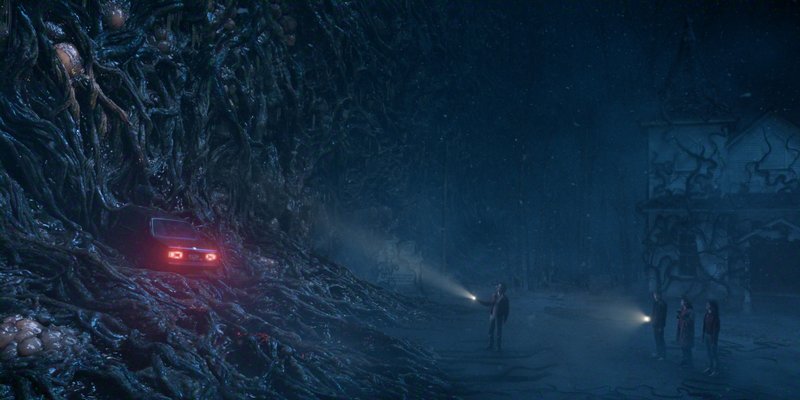
This is without a doubt the worst season, and I thought season two was mediocre. Season five ranked a solid one star in my 2025 wrap up for its blatant inconsistencies, poor writing, and tone. It's been a year and a half since Hawkins split. The government has placed a huge metal band-aid across the rips and has taken to cordoning themselves to a section of Hawkins. The party has been crawling the Upside Down for Vecna, sneaking into the gate when the soldiers have planned a burn. Vecna is nowhere to be found, Max is still in a coma, and El has been training for the day she comes face to face with Henry. While I enjoyed some aspects of this final volume, I have far more grievances than praises. Buckle up for an exhaustive list of the good and the atrocious.
 The Good
Nancy's and Jonathan's heart to heart while the lab is melting around them was both effective and long overdue. They were candid and still expressed their love for each other, but they'd grown apart. Shared trauma was no longer enough.
Dustin and Steve had a similar moment. Since the beginning of the season, Dustin was a mess, getting into fights with the jocks and being a complete asshole to his friends. When we get to the root of his problem—his lingering grief over Eddie's death—it's easier to accept. After a big fight, Dustin apologizes to Steve and tells him that he couldn't handle it if something happened to Steve too. From then on, they're back to their usual selves.
Karen was a badass. She fought a demogorgon, while drunk, and blew up some demodogs to save the kids in the hospital. While the latter is hard to believe given her condition, it was nice to see her get involved.
Jonathan and Steve end the season with a semblance of camaraderie.
Mr. Clark is invited into the inner ring and witnesses the Upside Down for himself.
Max's and Holly's escape is one of the better moments. The tension is palpable.
I was happy when Max and Lucas were reunited. It was such a long time coming.
Holly's promotion from secondary to primary character worked on the whole. Dipshit Derek was a delightful addition to the season. I didn't expect to like him, but he quickly grew on me.
While it might not be scientifically sound, the wormhole plot twist looks cool and better explains the overlapping dimensions. Similarly, the visuals of the melting lab and the wormhole breaking open and consuming sections of the Upside Down were awesome.
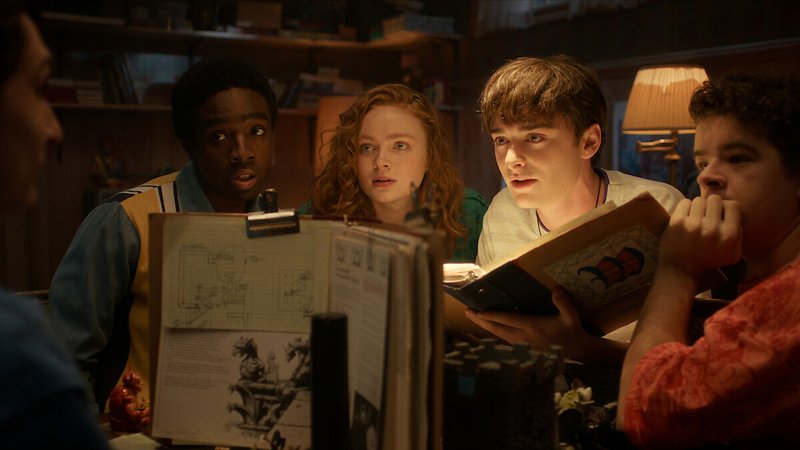
The final scene with the party was a good way of wrapping up their coming-of-age story and tapping into the hardness of leaving adolescence for adulthood. Holly, Derek, and the other kids being the next generation of dungeon crawlers is perfect. I also liked Mike's story about Eleven; it's an optimistic way to grapple with his grief.
 The Terrible, With Many Series Questions
There was way too much military focus, and it's made worse by the fact that Dr. Kay's handling of the situation never made sense. Why didn't they quarantine Hawkins and send the residents packing while they got the Upside Down under control? Why didn't they have a soldier manning the church's bell tower so civilians couldn't get a bird's eye view of the very obvious gate? Why did the government let them all walk away without punishment? They killed many soldiers and had been meddling with top-secret research. Wouldn't they have more readily been imprisoned?
If the military was in Hawkins for a year and a half, searching for Eleven, how did they not once catch a glimpse of her? Why didn't they check Hopper's cabin (a property owned by his family and in the public records)? Why didn't the military keep tabs on Mike, Dustin, Lucas, and Will when they knew they had hidden El in the past?
Robin's radio monologues were very Robin but were basically just a quick way to dump a shitload of exposition.
Nancy's whole personality shifted between seasons four and five. She's whiny, near insufferable, and too much of a badass. Her lack of an arc was disappointing.
It being their 37th crawl was unbelievable. How had they never been caught? Why did it take so long for them to find the wall?
What happened to the Turnbow family? Last we saw, they were tied up in a barn to keep them safe from the demogorgons.
Hopper and Joyce had gone to school with Henry. Why didn't they ever mention they knew him?
I hated everything to do with Kali (a.k.a. Eight). Kali's spiel about Dr. Kay injecting her blood into pregnant women seemed far fetched. It goes against everything Sullivan stood for, meaning he either didn't know about Dr. Kay's project or Kali lied. If Henry's blood was used to create super soldiers, Kali's powers are even stranger. She's the only one outside of Henry who can throw visions, so why can't the other children do the same? And, if she's a descendant of Henry, why didn't her blood work? Including Kali in this season instead of pretending she didn't exist highlighted every inconsistency from seasons two through four.
The constant dick measuring between Steve and Jonathan grew tiring.
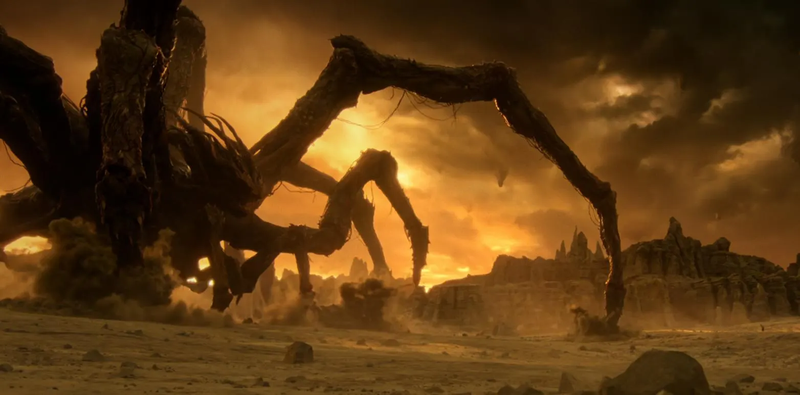
After seeing so much of Henry's mind palace in season four, I didn't care to see much more. They spent too much time with the kidnapped children and Max. The fact Henry refused to go into the cave because of the memory housed nearby was interesting but poorly executed. Jamie Campbell Bower did a phenomenal job with what he was given, but I couldn't care about little Henry and his introduction to the rock from Dimension X. How did scientists get this rock? Why was the scientist hiding in a bunker in the middle of the desert? Why did this location exist in his mind if he, or the Mind Flayer, wanted him to forget?
Henry was given more backstory this season, but none of it was particularly well executed. Young Henry is traumatized by what he finds in the bunker and is forever changed after making contact with the rock from Dimension X, but he doesn't seem to struggle against his actions and beliefs. When Will encourages Henry to fight against the Mind Flayer, to realize he's been manipulated this whole time, he rejects the idea. The Duffer Brothers noted in an interview that Henry had done too many horrendous things and to go against the Mind Flayer would mean reconciling his actions—something he couldn't do because so much damage had been caused. To start on a path of redemption would have meant owning the atrocities he'd enacted. When Henry said he had always been in control of himself and that he followed the Mind Flayer because he believed in its goals, the Duffer Brothers made him far less interesting. I expected some internal conflict outside of the feelings his memory brought forth.
Will's powers make sense when you consider his connection to the hive mind in season two, but his "birth" wasn't the same as El's. Where do his telepathic abilities come from?
Once Will taps into his full power, Joyce goes from babying him to throwing him into significant danger within a few hours. This is uncharacteristic, as was her beheading Henry in a moment of deep vulnerability. It was a brutal and inhumane way of killing him, even if you factor in her accumulated trauma. To painstakingly chop away at Henry while he's choking on his own blood doesn't gel with who Joyce was for the previous four seasons.
Will's coming out didn't lend the weight the writers were hoping for. The goal was to have his self-acceptance come from being loved by others, and he could only tap into the hive mind and manipulate it if he was completely comfortable with himself first. Not sure this works. Also, why did he come out to a room full of people and not just Joyce, Mike, and Jonathan?
There were too many planning scenes, most of which were used to provide exposition to the viewer. This late in a series, info dumps shouldn't be necessary.
The Abyss (Dimension X) is devoid of all life. When the party arrives, it's nothing but a desert. In the final fight, the Mind Flayer doesn't call for backup. Where are the creatures of this world? Why didn't demogorgons come to fight alongside the Mind Flayer? The Duffer Brothers noted that they didn't add demogorgons to the final battle because they were worried the audience would have demogorgon fatigue, but that's not a good answer. It makes far more sense for the Mind Flayer to have more than Vecna fighting beside him. As a result, what should have been an epic battle was anticlimactic.
In the final episode, we learn that the Mind Flayer has been using Henry this whole time. This would have been acceptable if the big bad hadn't flip-flopped between the Mind Flayer and Henry since season three. It's obvious the Duffer Brothers didn't plan for the final volume.
Why didn't anyone important die? Someone should have fallen off the radio tower when it started pushing against the other dimension. Someone should have expired in the battle against the gargantuan Mind Flayer. Dustin, Steve, Nancy, or Jonathan could have perished in the lab after it started melting. There were so many opportunities that weren't taken because the Duffer Brothers didn't have the guts to kill off a main character. Kali died (who cares) and Eleven is possibly dead (of course they couldn't confirm her death). This late in the game, main characters shouldn't have plot armor.
 Closing Remarks
I've been a fan of Stranger Things since the beginning. Season three will always be my favorite for its tone, character interactions, and visuals. While every season had its faults, no other volume compared to the shit show that was the final season.
Taken as a whole, the only characters with satisfying arcs were Max, Steve, Billy, Will, and Hopper. Dustin, Lucas, Robin, and Karen were solid enough and had season-specific growth but weren't forever changed by the journey. Eleven evolved from a girl with pscionic powers to a confident powerhouse, but her major growth stemmed from season four alone. Mike, Erica, and Jonathan were consistent but shallow. Nancy's arc existed but didn't fully connect; her personality shifted so drastically in season five that she might as well have been a new character. Joyce became uncharacteristically willing to put Will in harm's way and shockingly violent towards Henry (never in a million years did I expect her to be so unfeeling to a man who was already fatally wounded).
While season five didn't ruin the whole experience for me, I wouldn't recommend the whole series to anyone. I'd suggest stopping after season three, where the Mind Flayer plot gets wrapped up and El has lost her powers.
I expect I'll avoid future projects written and directed by the Duffer Brothers. As a writer, it's hard not to dissect stories and judge those who don't respect their audience enough to be consistent and thoughtful.
That said, I'll always have a soft spot for my favorite characters and scenes. The destination might have disappointed, but the journey had plenty of highs.
Photos courtesy of Netflix and the Stranger Things Wiki