
A special thank you to my newest monthly supporters, Jane and Danièle. This one's for you. And thank you, Deborah, Rena, Heather, Bob, and "someone" for recent coffee support.
A Familiar Place
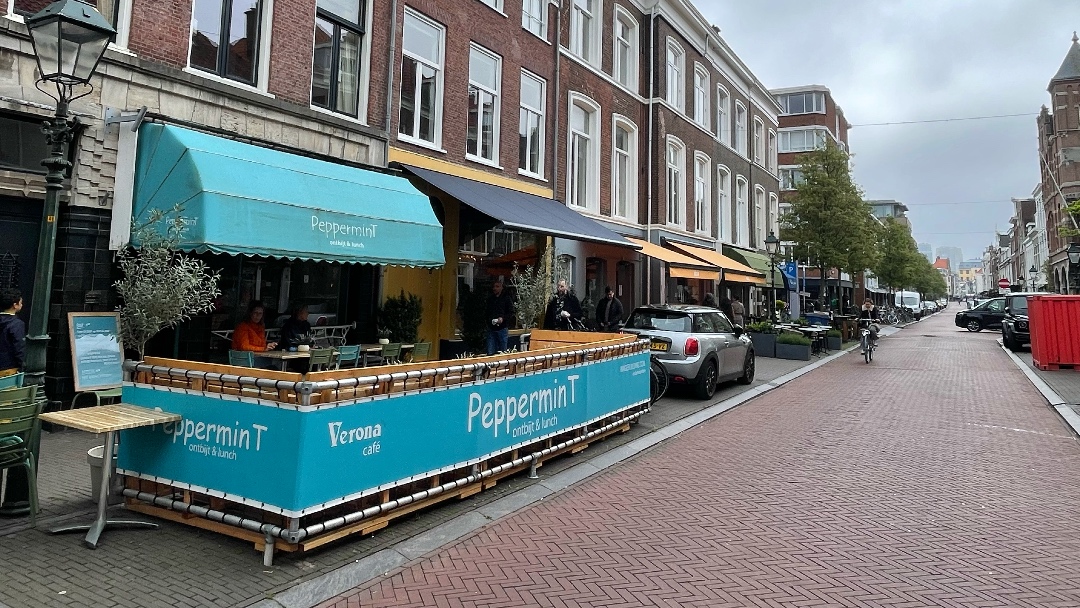
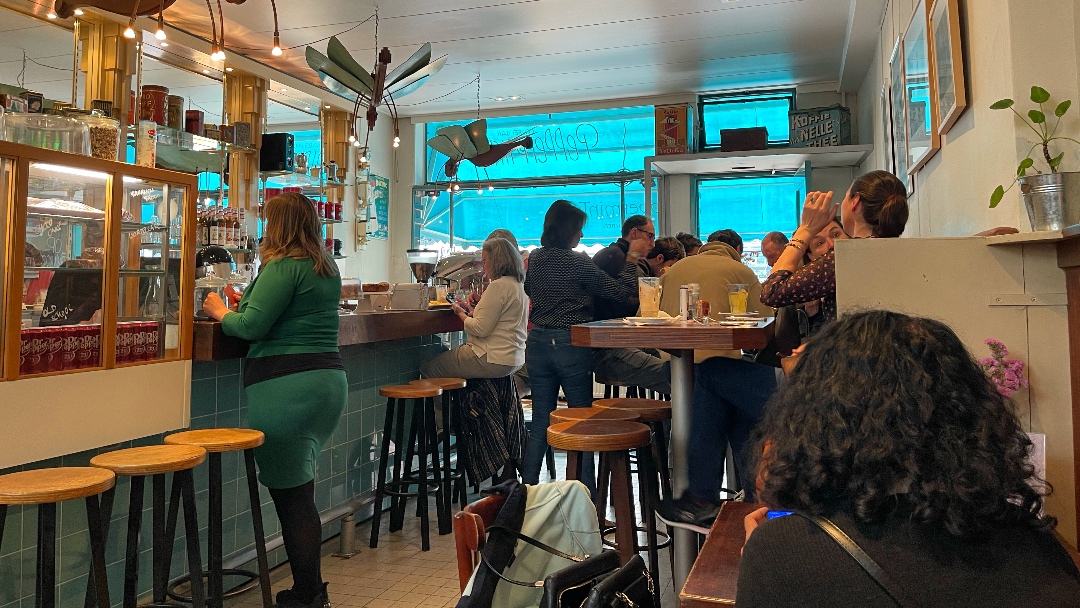
It's Thursday afternoon, almost 2 PM, and I'm in the Peppermint Cafe in The Hague. April sunshine warms the wooden tables through the windows, but the light is bluish because of the mint-colored facade. The similarly colored tiles of the bar haven't changed a shade since the mid-1990s, when I lived just a minute's walk from here on Frederikstraat.
The scent of fresh-baked apple cake mingles with coffee, creating that particular Dutch cafe perfume that feels like coming home. Outside, the terrace is half-filled—two elderly men share sections of a quality newspaper between sips of coffee. They look familiar, but I don't know them; they blend perfectly into the atmosphere of this street on the edge of the Archipelbuurt neighborhood, an easy walk from the city center.
The barista, a woman in her fifties, has warm smiles for regular customers. Although I don't visit this cafe often enough to be considered part of the core clientele, I'm also greeted with that warm, welcoming smile.
Regular customer or not – I do have my own small table here in the corner from where I can oversee the bar, the door, and most of the tables. It's not unique for this cafe; as a true geographer, I often remember where I sat last time and consider that from then on 'my' personal space in that cafe, a sense of owning a space I share with my cat Luna. In other cafes where I often return, such a preferred seat is defined by the availability of an electricity outlet for my laptop. Here, there is none available. Peppermint is not known for innovation, nor does it have the ambition to become a hangout for laptop nomads like me.
I overhear two women at the table next to me discussing the observatory scene from La La Land. One speaks with a heavy Dutch accent, while the other responds in native English. "It's Griffith Observatory," says the Dutch woman, pronouncing it "Greef-it." Her companion nods, "The same place where James Dean played that famous scene in Rebel Without a Cause."
The Bridge Between Then and Now
Walking here earlier, I crossed the Java Bridge and stopped to photograph its stone carvings of Indonesian scenes: rice paddies, growing tea and coffee, and stylized renderings of daily life in the former Dutch East Indies. The April light cast shadows that emphasized the reliefs, making them seem more striking than usual.
Thirty years ago, I crossed this bridge daily while working on Netherlands-Indonesia relations at the Foreign Ministry. It was a time when the weight of our colonial past still hung heavily over diplomatic relations. Both sides tried to carefully navigate through historical grievances and contemporary aspirations. We hit some rocks along the way—some hidden under the water, but others sticking above the water level in plain view as if to warn us. Decades have passed, historical insights have progressed, and the sailing is much smoother these days.
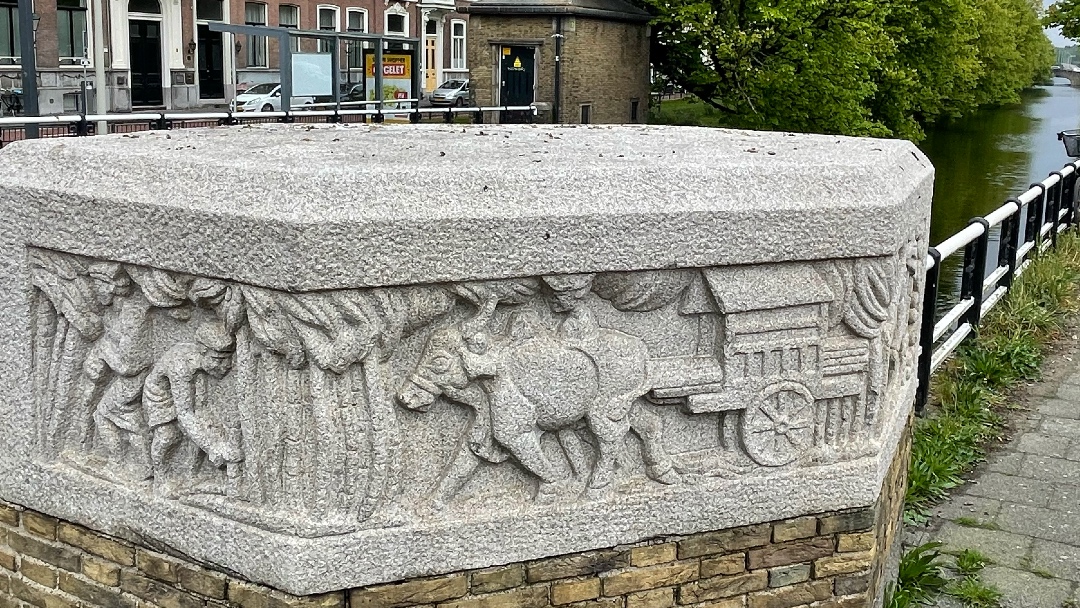
This bridge, decorated with four stone carvings added in 1939, stands as an ironic monument to history's overlapping tragedies. Just four years after these colonial scenes were installed, in 1943, the bridge was broken down when the area was declared a 'Sperrgebied' (restricted zone), and the Atlantic Wall was constructed nearby. After the war, when the bridge was rebuilt, these stone carvings were carefully reinstalled—preserving cultural memories even as the historical landscape changed. It's remarkable how our colonial past and our own subsequent occupation by Nazi forces converged at this one spot—layers of history intersecting in stone and memory. The stone carvings portray an idealized, almost romantic view of Indonesia that bears little resemblance to the complex realities of Dutch rule.
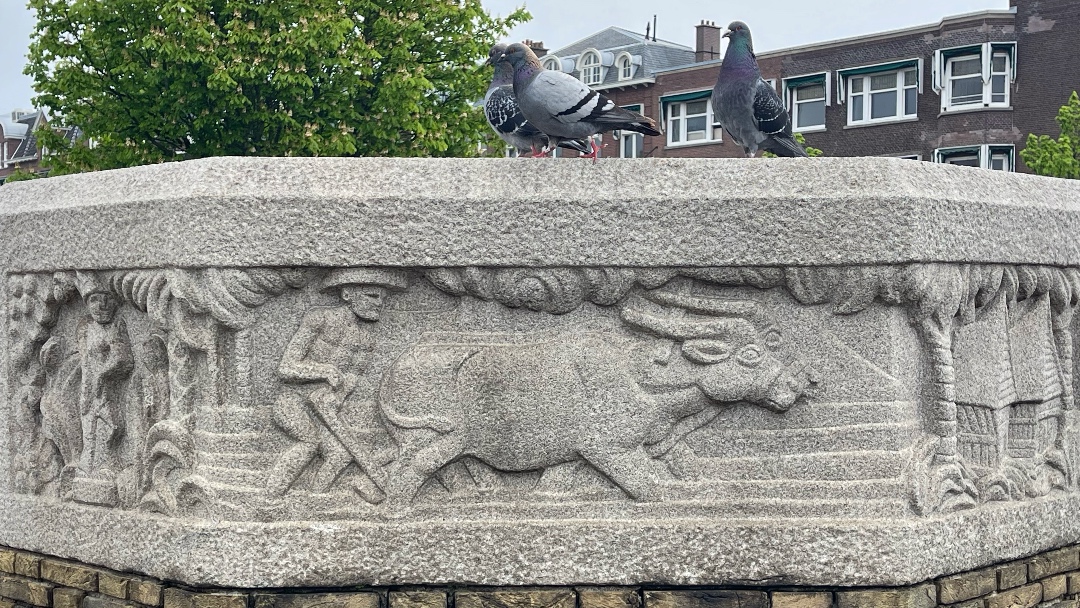
These romanticized scenes remind me of my time living in a central Javanese town years ago. The idyllic rice paddies carved in stone look like the landscapes I encountered when visiting the surrounding villages to interview local farmers. But a bridge carving can't express the complex social dynamics, the challenges of daily life, and the pain of history that I witnessed firsthand. These stylized renderings might capture the physical beauty but fail to acknowledge the human stories beneath.
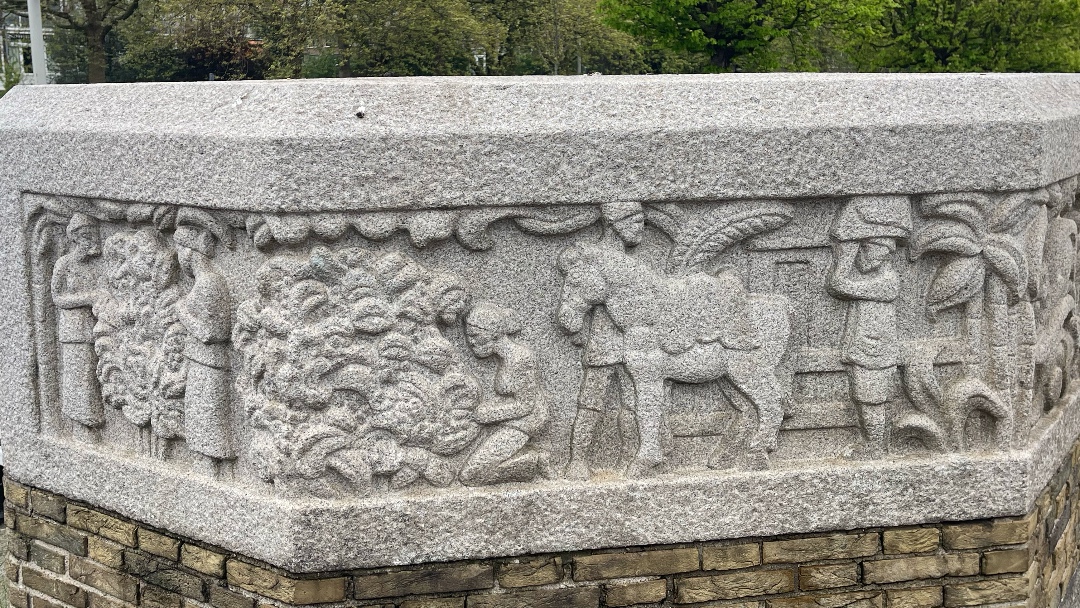
Months ago, I promised a friend who lives on Java I'd send photos the next time I was here. Today, I remembered snapping several images of these stone narratives.
What I Wanted to Share With You Today
My recent decision to cancel my American trip wasn't made lightly. For years, I've attended the Conference on World Affairs in Boulder, hiked the southwestern trails, and maintained close connections with friends and colleagues across the Atlantic. But I could no longer ignore the fact that we live in a new and frightening reality.
Last month, I wrote in my Substack newsletter about the growing distance between Europe and America and how my published warnings about political extremism had potentially made my travel risky. I'm still processing this dramatic unbalancing of the world we thought we knew; the reality feels too raw to accept.
It feels like being dumped by the one you loved, and, as with any profound loss, the first reaction is often denial—a refusal to believe that things have truly changed. What ensues is a tumult of emotions that psychologists have long described as the stages of grief: the denial I felt is followed by anger, bargaining, depression, and finally, acceptance. These stages don't always unfold in neat order, nor does everyone experience them all (I certainly don't). Still, some of these elements capture the emotional turbulence I experience while coming to terms with a world transformed. I haven't reached the stage of acceptance yet; how can I when the destruction of the fabric of society is still raging? Instead, two other emotions compete: fear and hope.
My canceled trip and the broader geopolitical shifts share a common root: the collapse of predictability in a system that once seemed stable. Just as I can no longer confidently plan travel to a country I've visited dozens of times, businesses and diplomats can't reliably forecast in a world where international relationships appear and disappear with a tweet.
So, I hiked along the Rhine River instead of Arizona's deserts. As always, hiking heals, even if I don't walk in the country that liberated us from fascism but in the one that, more than any other country I know, teaches each new generation never to repeat its failures of the past.
Games Without Winners
The cafe grows busier as the afternoon progresses. A mother with a stroller navigates between tables. An older man in a perfectly tailored suit sits alone on the table next to me, reading a physical newspaper – an increasingly rare sight in many cafes but a familiar scene in the Peppermint.
The women at the next table have drifted from La La Land to James Dean; I catch phrases of their conversation: "where they're racing toward the cliff" and "chicken run: "Whoever jumps first is the chicken."
Their conversation transports me to a memory from years ago, when I visited the site where James Dean crashed his Porsche 550 Spyder on September 30, 1955, near Cholame, California. I recall standing there, trying to reconcile the mundane reality of the rural crossroads with the cultural mythology that had grown around it. A gleaming stainless steel monument erected by a Japanese businessman stood nearby. The shiny structure was strangely out of place against the dusty California landscape.
I recall the red windbreaker I used to wear in my early twenties. I wasn't alone in channeling Dean's spirit—Bob Dylan was said to wear "a coat he borrowed from James Dean" on the cover of his 1963 album The Freewheelin' Bob Dylan, a connection later immortalized in Don McLean's "American Pie," where Dylan is the "jester." But Dylan's beige coat doesn't look like Dean's, so I guess McLean's lyric wasn't about the garment itself but the mantle of cultural rebellion it represented—one icon passing the torch to another.
Dylan gave a restless generation the words and voice needed in changing times. I wonder when the current resistance movement in the US will discover the uniting power of music. The climate movement mostly ignored this opportunity. Let's not make this mistake again.
On the table next to me, they replay Rebel Without a Cause's iconic car scene, filmed many decades before they were born. Natalie Wood's nervous smile, the revving engines, the cliff edge looming. Like warfare, igniting the roaring thunder is far easier than knowing when to jump out before the cliff.
It's remarkable how precisely this cinematic metaphor maps onto today's geopolitical standoffs. The world's playing its own high-stakes game of chicken—most visibly between the US and China over tariffs. Trump blusters, Xi waits. Each side dares the other to bend first, convinced that holding the line demonstrates strength
But as any student of James Dean knows, nobody really wins at chicken. You either jump or you crash. The cliff edge represents potential economic collapse, with global markets watching nervously like the teenagers in the film. Both drivers—both countries—seem motivated by pride rather than rational self-interest.
Unlike chess or poker, Trump prefers the chicken game because it rewards irrationality. The driver who convinces their opponent they won't swerve gains the advantage. In international relations, this translates to leaders who appear unpredictable or unconcerned with consequences. We're watching countries deliberately limit their own options to gain leverage, a dangerous strategy when the cliff edge is a global recession and increased international tensions.
Trump crashed the markets and then jumped while trying to spin the story as if Xi is begging for negotiations. He's rebelling without a cause against US institutions, the international status quo, morals, norms, and rules without a coherent reason for his defiance. This rebellion isn't directed toward any achievable goal beyond the performance of strength itself.
The tragedy of this particular game of chicken is its fundamental pointlessness. Traditional diplomatic confrontations center on tangible objectives: territory, resources, or specific policy changes. Trump's tariff policy seems driven more by performative toughness than achievable goals. Ever the showman, he hasn't given a thought to defining the conditions for victory. It's all about the image of being a winner and, more importantly, making the other player look like a loser.
Distance or Depth?
I watched elements of a similar dynamic play out in diplomatic rooms during my career; I often saw some moderate pride and posturing preceding compromise. A notable difference in today's boasting is the speed and public nature of the confrontation, seemingly without a thought to the next move after impulsive outbursts on the international stage. More importantly, the difference is that in my diplomatic experience, the initial pride and posturing usually gave way to compromise; yes, painful, but acknowledging the reality that a win-win is preferable to a version of the winner-takes-all scenario.
Meanwhile, the latest headlines are a blur of threats and retreats. Trump announced 145% tariffs and then hinted at lowering them. His advisers first talk tough and then leak worries about a recession. Beijing, meanwhile, sits tight, betting that the real art of the deal is patience, which they know usually outlasts bravado.
As I sip my coffee, I remember discussions in this very cafe decades ago when we debated American foreign policy with occasional friendly criticism. The distance from those conversations to today's reality feels immeasurable. What hasn't changed is the ambient noise of conversations and clinking cups in the Peppermint. As I get older, I appreciate continuity, especially in these turbulent times.
Looking Forward While Looking Back
Though transformed and filtered, my travel experiences will inevitably find their way into my writing. My recent pieces on The Planet have touched on this theme of separation and warning, but my next work will combine these themes with an exploration of reconnection.
Next month, I'm going to Ottawa for the GeoIgnite conference. I'm finalizing my presentation and looking forward to reconnecting with friends from my time living there. After that, I'll spend some time in Norway while contemplating which Camino route to take in Spain. I'll also consider whether to cover more ground or slow down to absorb more culture. After several thru-hikes—or pilgrimages if you like—Santiago de Compostela is no longer a goal; it's merely a direction.
What would you choose? Distance or depth? I ask this question in more contexts than travel these days. Do we rush forward, covering more ground, or slow down to truly understand where we are? Do international relationships benefit from broad, shallow engagement or focused, meaningful connection? Perhaps the answer to our geopolitical chicken game isn't about who swerves first but whether we can reimagine the road entirely—wide enough for everyone to pass safely. I always believe in win-win; games of chicken have, at best, only one winner.
I left the draft of this story on Thursday when I departed from the Peppermint Cafe, and I'm only finding the time to finalize it today in Oslo, Norway. My red backpack for the Camino stands next to my desk, ready to be used in the summer. This story has grown far longer than planned for a short Buy Me a Coffee article; it now counts 2,400 words instead of 200. So I plan to post it later this week, with some small variations, in The Planet newsletter as well.
Looking back at my notes, I wonder if I didn't drift too far off for you, my readers and donors, to follow my thoughts and impressions. By the time I left, the women discussing La La Land and James Dean had moved on to other topics. Younger visitors with laptops had replaced the two newspaper readers on the terrace. In the days that followed, I picked up this story whenever there was a bit of time, while orange crowds celebrated King's Day or while I was waiting at the airport.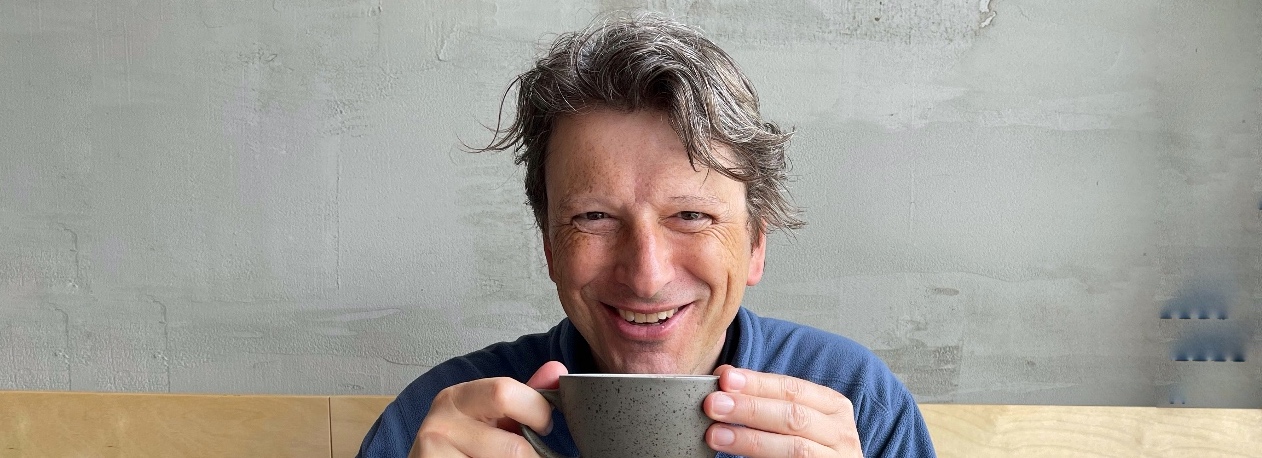
There will likely be more stories for Buy Me a Coffee. I write these coffee chronicles when new monthly or yearly subscribers join. That may be another story from the Peppermint since I like cafes or lunchrooms where nothing seems to change. Especially in a rapidly changing world, I would appreciate it if some things remain steadfast—in history, travel, and the cafes I revisit.
With a steaming cup of gratitude,
Alexander