HISTORY
7 PAGAN FESTIVALS WE STILL CELEBRATE TODAY
Wednesday October 6th, 2021 at 9am EST.
7 Pagan Festivals We Still Celebrate Today:
Holidays with pagan origins:
Christmas
New Year’s Day
Easter
The Roman version of Halloween
May 1st - Labor Day
Epiphany or Three Kings Day
Saint John’s Eve
When we hear or read about pagan religions and traditions, we automatically think that they’re long gone, things that have absolutely nothing to do with our modern lives.
But if we are curious enough to just scratch the surface of our “modern” traditions, we might be very surprised to discover that there is actually nothing new in most of the holidays we celebrate every year. When it comes to festivities, rituals and traditions, we literally didn’t invent anything. We keep doing the same things the ancient Romans used to do 2,000 years ago – we simply call them by different names.
If somebody wholeheartedly wished you a “very merry Dies Natalis Solis Invicti” what would you reply? Or what if somebody were to ask you insistently about your plans for the Kalendae Ianuariae? It wouldn’t ring a bell, would it? The Dies Natalis Solis Invicti and the Kalendae Ianuariae, aka Christmas and New Year’s day, are just two of the many holidays we still happily celebrate that actually go all the way back to ancient Rome.
But how come so many holidays survived, albeit in “rebranded” forms? When Emperor Theodosius issued the Edict of Thessalonica in 380 AD, paganism was outlawed and the Christian religion became the one and only official religion of the Roman Empire. But for the many Romans who remained faithfully devoted to Jupiter and his mythological crew, the transition to the new monotheistic religion was anything but easy.
And so the Church decided to replace the most important pagan festivities with new Christian holidays on the same dates – as the calendar remained pretty much the same as before, it was much easier for the one-time pagan populace to adjust to this new faith.
In exactly this way the date of Christmas was established on December 25th in order to replace the old Festival of the Sun God, and the same happened with many other holidays. This strategy worked out so well that with the passing of the centuries, even the memory of the original pagan celebrations faded away and was almost completely forgotten.
So let’s put aside for a moment our holidays as we have always known them and rediscover these ancient traditions – we have a lot more in common with them than you might think!
1. Christmas
We already know how we celebrate on December 25th, but how would ancient Romans have celebrated their pagan version of Christmas?
For an ancient Roman, December 25th was the time to celebrate Sol Invictus, the Unconquered Sun. The Sun God was venerated under different names all over the enormous territory of the Roman Empire and became the most important god during the 3rd century AD. The emperor Aurelianus built a big temple for the Sun God in Rome and inaugurated it right on December 25th, 274 AD. It is no wonder that the biggest celebration of the Sun God fell on this date at the beginning of winter time: on December 21st in fact, with the winter solstice, the sun “wins” his battle against the darkness and the daylight hours slowly increase. That’s why such a peculiar date, marked by the victory of the light, was busy with the birthdays of many gods: Dionysos, Hercules, Adonis, Mithras and even Tammuz, the ancient Mesopotamian god of fertility.
But December 25th was only the last day of more than a week of celebrations in Rome, known as Saturnalia, leading up to the Dies Natalis Solis Invicti, the birthday of the Sun. Starting on December 17th, the Saturnalia involved a lot of banquets and all sorts of parties with family and friends. During this time, all social rules were reversed, just like in the Carnival, but the most significant aspect of the Saturnalia was the traditional exchange of gifts (just like we do nowadays). The most popular gifts for this occasion were little figurines of gods made out of clay, that used to be put on display on an altar at home: this might be at the origin of the Italian tradition of the Nativity.
2. New Year’s Day
Also for the Romans, New Year’s Day was a very important date, but the most interesting fact is that originally the Roman year didn’t start on January 1st but in March. This was mainly because March was the month dedicated to Mars, the Roman god of war, which was also believed to be the divine father of Romulus, the founder of Rome. Due to extraordinary circumstances in wartime, in the year 153 BC the consul Quintus Fulvius Nobilior exceptionally moved New Year’s Day to January 1st for the first time in history. However, it was Julius Caesar in 46 BC, with his Julian Calendar, who permanently established the holiday on January 1st. The beginning of the year was dedicated to a very peculiar Roman god: Janus. According to the mythology, Janus was the two-faced god of doors (in fact his name Janus comes from ianua, "door" in Latin), beginnings and passages: that is why the first month of the year, January, was named after him. On New Year’s Day the Romans would go on a procession to the top of the Capitoline Hill, where the priests would sacrifice a white bull to ask protection from the gods for the new year. Moreover, the high priest, the Pontifex Maximus, would offer to Janus a pie made of flour, cereals, cheese, eggs and olive oil, to invoke the god’s benevolence.
The people would then celebrate by feasting together and wearing something red, which was supposed to bring good luck, health and fertility.
3. Easter
Easter is a very peculiar Christian holiday, which doesn’t fall on a specific date as all the other festivities, but it is based on the cycle of the moon: in fact, it falls on the first Spring Sunday after the new moon. The Jewish root of the Christian Easter Holiday are widely known: the Christian festivity is in fact connected to the holiday of Passover, which has its foundation in the exodus of the Jews from Egypt.
But many traditions associated with Easter show completely different (and pagan) origins: in fact, the word “Easter” itself comes from the name of Eostre, the Germanic goddess of Spring. The famous Easter Eggs and the Easter bunny, which is supposed to deliver candies to the kids, were originally associated with Eostre, as symbols of rebirth and fertility.
What about the Romans?
The Romans had a Spring holiday around March 15th dedicated to Anna Perenna, a pretty obscure goddess, who was variously identified with the moon or with some Etruscan mother goddess. Most importantly, she was a deity of the circle of the year, given that her holiday would fall right on the first day of the year, according to the original Roman calendar. It was customary to celebrate with meals with family and friends, particularly in the woods sacred to Anna Perenna. On this occasion, the Romans would drink a lot of wine, since it was believed that each cup would lengthen their life by one full year. A traditional way of honoring the goddess, as she was also associated with the idea of fertility and rebirth, was for couples to make love by the river.
The Origin Of Easter Is NOT What People Think. It Actually Has Absolutely NOTHING To Do With CHRIST .. NOR Christianity. Easter Also Originated From ISHTAR and the dying of "easter eggs' comes from the ancient pagan practices, rituals and traditions of sacrificing babies and dipping these eggs into the blood of the sacrificed babies.
4. The Roman version of Halloween
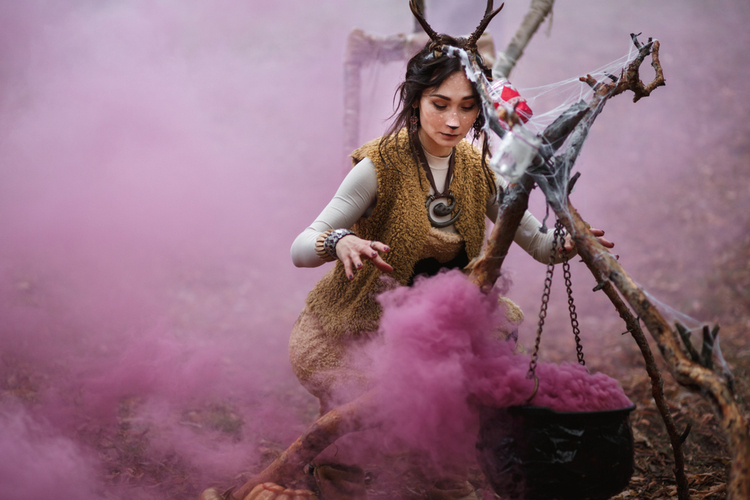
Everybody knows that Halloween traditions originated from the ancient Celtic festival of Samhain, but did you know that the Romans had something very similar and probably even creepier?
Nowadays we have only one day dedicated to the memory of the Dead, on November 2nd, while the Romans had multiple occasions during the year to try and reconnect with their passed loved ones. In February, the week from the 13th to the 22nd was entirely dedicated to visiting the dead, bringing food offers to the graves (this particular ceremony took the name of Feralia, from fero, to bring) or even having lunch by the grave, to keep the dead person good company.
Moreover, it was customary for the Romans to leave black beans on the graves, representing their tears.
Also, the Romans used to believe that, to be at peace, the dead needed to visit the world of the living every now and then. That’s why on some days they would open the entrance of the Mundus, a deep pit which was believed to be the entrance to the underworld, to allow the dead to access the world of the living.
5. May 1st - Labor Day
As most people know, Labor Day is a holiday that was established in 1894 to honor the labor movements and unions that improved the conditions of millions of workers. It does seem very modern, right? But it is not! In fact, May 1st was widely celebrated in ancient times too. For the Romans, May 1st was dedicated to Maia, an ancient goddess associated with the element of fire and with fertility. The entire month was - and still is - named after her.
Interestingly enough, Maia was considered a mother goddess and that’s the reason why, after the Christianization of the Roman empire, the Church decided to convert the ancient festival of Maia into a holiday dedicated to another heavenly mother, the Virgin Mary.
6. Epiphany or Three Kings Day
Every January 6th most Christian Churches celebrate the holiday of Epiphany, remembering the visit of the Magi Kings to Baby Jesus, or, according to Eastern tradition, the day Jesus was baptized.
The rituals associated with this festivity differ from country to country and involve traditional cakes, such as the Three Kings Cake, or chalking the house doors with the initials of the Magi Kings, or simply attending mass. In Italy, Epiphany is very popular, particularly among children, as it is associated with a special character of Italian folklore: the Befana.
The Befana, whose name is actually a corruption of the world Epifania, is a little old witchy lady who lives in the mountains. During the night before the holiday, she flies on a broom and delivers little gifts, mostly candies, to the good kids: the naughty kids, instead, only receive coal (even though nowadays the coal is made of sugar, luckily for the naughty kids!).
But who is the Befana really?
According to Italian tradition, she was the lady who pointed the Magi kings in the right direction for Bethlehem, but if we look back to Roman times, we will find some very interesting traditions that can explain where the Befana originally came from.
The Romans used to believe that during the twelve nights following the winter solstice, the moon goddess Diana, accompanied by two obscure deities, Satia and Abundantia, respectively the personifications of satiety and abundance, used to fly over the fields, to make them fertile. Moreover, the year itself was seen as an old lady, possibly representing Mother Nature itself. Before dying, she would still make the last gift of seeds and food to the people, as a promise that she would be born again in Spring.
Apparently, she would also deliver coal, not as a punishment for the naughty kids, but as a symbol of warmth.
7. Saint John’s Eve
Saint John the Baptist holds a few interesting records among the saints: not only is he the most represented saint in all the history of religious art, but he is also the one and only saint who is celebrated on his birth date instead of his death date.
He is indeed a very special saint, as he prepared the way for Jesus, who was also in fact his cousin. Just as it happened for Jesus, Saint John’s feast took place on a Solstice: as the birth of Jesus on December 25th marks the rebirth of the Sun, so the birthday of John on June 24th marks the beginning of the diminishing sun.
Saint John’s Eve is one of the most ancient Christian holidays: in fact Christians have been celebrating it on this date at least since the 4th century. Every country has his own way of celebrating Saint John, but there are some recurring elements, such as traditional homemade dishes, like the Irish “Goody”, bonfires, or herbs, like the so-called St. John's Wort, that are supposed to be collected on Saint John’s Eve in order to keep evil spirits away.
But what did the Romans do on that very same date?
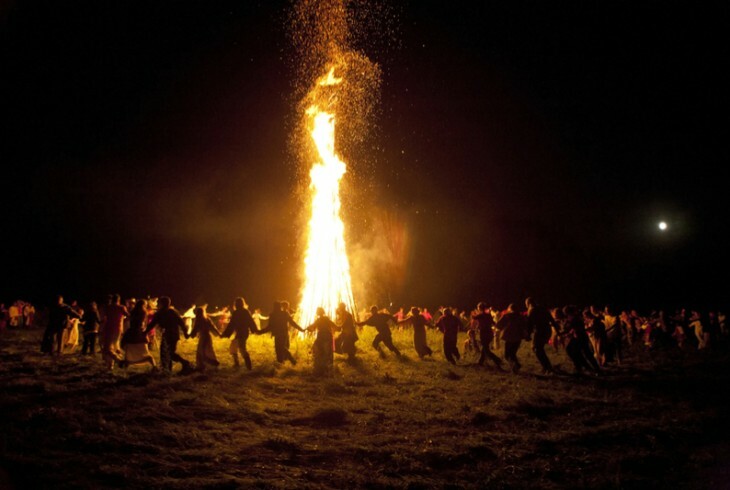
The night of June 24th, the Romans would gather around bonfires in the countryside and dance, feast and drink all night long in honor of Fortuna, the goddess of luck.
She was a very popular goddess, particularly among the poor, who would constantly try to please her with offers or sacrifices, hoping to get a change of luck: but Fortuna was a tricky goddess, very difficult to please.
These are just seven major festivities based upon Roman traditions that we still celebrate nowadays, but there are many more… more than enough to make us realize that there's nothing new under the sun!
Lists of holidays
From Wikipedia, the free encyclopedia
For a list of holidays by country, see List of holidays by country. For a list of multinational holidays by date, see List of multinational festivals and holidays.
Lists of holidays by various categorizations.
Contents:
1 Religious holidays
1.1 Abrahamic holidays (Middle Eastern)
1.1.1 Christian holidays
1.1.2 Islamic holidays
1.1.3 Jewish holidays
1.1.4 Baháʼí holidays
1.2 Dharmic holidays (Indian)
1.2.1 Buddhist holidays
1.2.2 Hindu holidays
1.2.3 Jain holidays
1.2.4 Sikh holidays
1.3 Pagan holidays
1.3.1 Ancient Greek/Roman holidays
1.3.2 Celtic, Norse, and Neopagan holidays
1.4 Other holidays
1.4.1 East Asian holidays
2 Messianic interpretations of Jewish holidays for Christians
3 Western winter holidays in the Northern Hemisphere
4 Secular holidays
4.1 Regional
5 Consecutive holidays
6 Unofficial holidays, awareness days, and other observances
7 See also
8 References
Religious holidays
Further information: Category:Holidays
Abrahamic holidays (Middle Eastern)
Christian holidays
See also: Liturgical year
Advent (Preparation for the commemoration of Jesus' Birth. Start of the Christmas Season)
Christmas (Birth of Jesus; the end of Advent)
Easter and Holy Week (Death and Resurrection of Jesus; the end of Lent)
Palm Sunday (Commemoration of the triumphal entry of Jesus into Jerusalem; Last Sunday before Easter)
Holy Monday (Anointing of Jesus)
Holy Tuesday (Predictions of Jesus)
Spy Wednesday (Betrayal of Jesus by Judas)
Maundy Thursday (Celebration of the Last Supper)
Good Friday (Death of Jesus)
Holy Saturday (Resting of Jesus)
Easter Vigil (Official celebration of Jesus' Resurrection)
Feast of the Annunciation (Conception of Jesus)
Gregorian New Year (First day of January every year)
Lent (Preparation for the commemoration of Jesus' Death and Resurrection. Start of the Easter Season)
Mardi Gras (Celebration period before the ritual fasting season of Lent)
Pentecost (Descent of the Holy Spirit upon the disciples of Jesus)
The 7th Day Sabbath (Every Saturday of the year. Some Christian groups (e.g. Catholic, Protestant, etc.) however, observe Sunday as the Sabbath)
Islamic holidays
Main article: Islamic holidays
Ashura (Day of Atonement; Tenth day of Muharram. Muharram is the first month of the lunar year)
Eid (feast): Date determined by the lunar calendar and observation of the Moon
Eid al-Adha (Feast of the Sacrifice; Tenth day of Dhu al-Hijjah, the twelfth and final month of the lunar year)
Arafah (Eve of Eid al-Adha)
Eid al-Fitr (Feast of Breaking the Fast; First day of Shawwal. It marks the end of Ramadan, the fasting month. Part of honoring this occasion is "zakaat ul-fitr" (giving alms to the needy on the day of Eid al-Fitr))
Chaand Raat (Eve of Eid al-Fitr)
Holy Month of Ramadan (First day of Ramadan; A 30-day period of fasting to commemorate the first revelation of the Quran)
Jumu'atul-Wida (Friday of Farewell; Last Friday of Ramadan before the celebration of Eid al-Fitr)
Laylat al-Qadr (Night of Decree; Last ten days of Ramadan. The revealing of the first verses of the Quran to the Prophet Muhammad)
Isra and Mi'raj (Night Journey; Ascension of Prophet Muhammad into Heaven)
Jumu'ah (More commonly known as the Day of Assembly or the Day of Gathering; Held every Friday of the lunar year as an alternative to the Zuhr prayer)
Mawlid (Birth of the Prophet; Birth of Prophet Muhammad)
Nisfu Sha'ban (Bara'a Night; Decisions of the fortunes of men in the approaching year)
Nuzul Al Quran (First revelation of the Quran)
Raʼs al-Sanah al-Hijrīyah (Islamic New Year; First day of Muharram every year)
Jewish holidays
Main article: Jewish holidays
Chag HaMatzot (Feast of Unleavened Bread - 7 days of consumption of matzo with wine and avoidance of leavened foods)
Hanukkah (Feast of Dedication; Also called the Festival of Lights - Commemoration of the rededication of the Jerusalem Temple)
Pesach (Passover - Deliverance of Jews from slavery in Egypt)
Lag BaOmer (A holiday celebrated on the 33rd day of the Counting of the Omer, which occurs on the 18th day of the Hebrew month of Iyar)
Purim (Feast of Lots - Deliverance of Jews in Persia from extermination by Haman)
Reishit Katzir (Feast of Firstfruits - Collecting and waving of grain bundles (barley or wheat); Occurs during the 7 days of unleavened bread after the Sabbath)
Rosh Hashanah (Jewish New Year - First day of Tishrei every year)
Shabbat (The 7th Day Sabbath - The day of rest and holiest day of the week, Saturday)
Shavuot (Feast of Weeks - Wheat harvesting in Israel and the receiving of the Torah at Mount Sinai)
Sukkot (Feast of Tabernacles; Also called the Feast of Ingathering - Dwelling within sukkahs for 7 days (in Israel) or 8 days (the diaspora); Considered by some to be a mini-campout)
Shemini Atzeret (A holiday sometimes confused as being the 8th day of Sukkot; Beginning of the rainy season in Israel)
Simchat Torah (Observed after Shemini Atzeret; Completion of the Sefer Torah)
Yom Kippur (Day of Atonement - A day of fasting and repentance of one's sins from the past year)
Baháʼí holidays
Main article: Baháʼí Holy Days
1st Day of Ridván
9th Day of Ridván
12th Day of Ridván
Ascension of `Abdu'l-Bahá
Ascension of Bahá'u'lláh
Baháʼí Naw-Rúz
Birth of Bahá'u'lláh
Birth of the Báb
Day of the Covenant
Declaration of the Báb
Martyrdom of the Báb
Dharmic holidays (Indian)
Buddhist holidays
Asalha Puja
Blessed Rainy Day (Bhutanese)
Bon Festival (Japanese)
Buddha's Birthday or Vesak
Diwali
Magha Puja
Pchum Ben (Cambodian)
Poya
Hindu holidays
See also: List of Hindu festivals
Akshaya Tritiya
Bhogi
Diwali
Bhaubeej
Diwali (Govardhan Puja)
Diwali (Laxmi Puja)
Durga Puja
Ekadasi
Ganesh Chaturthi
Gokul Ashtami
Gudhi Padwa
Guru Purnima
Holi
Karthikai Deepam
Krishna Janmaashtami
Lohri
Mahalakshmi Vrata
Mahashivratri
Makara Sankranti
Mysore Dasara
Navratri
Nyepi
Onam
Pongal
Raksha Bandhan
Rama-Lilas
Ram Navami
Thaipusam
Ugadi
Vaikunta Ekadasi
Vaisakhi
Vijayadashami
Jain holidays
Diwali
Kshamavani
Paryushana
Sikh holidays
Bandi Chhor Divas
Gurupurab
Guru Tegh Bahadur's Martyrdom Day
Hola Mohalla
Vaisakhi
Pagan holidays
Ancient Greek/Roman holidays
Adonia/Rosalia
Dionysia/Bacchanalia
Floralia
Kronia/Saturnalia
Lemuralia
Lykaia/Lupercalia
Parentalia
Vestalia
Vinalia
Celtic, Norse, and Neopagan holidays
See also: Swedish festivities
In the order of the Wheel of the Year:
Samhain/Halloween (Celtic): 31 October–1 November, Celtic New Year, first day of winter
Yule (Norse): 21–22 December, winter solstice, Celtic midwinter
Imbolc/Candlemas (Celtic): 1–2 February, Celtic first day of spring
Ostara/Easter (Norse): 21–22 March, spring equinox, Celtic midspring
Beltane/May Day (Celtic): 30 April–1 May, Celtic first day of summer
Litha (Norse): 21–22 June, summer solstice, Celtic midsummer
Lughnasadh/Lammas (Celtic): 1–2 August, Celtic first day of autumn
Mabon (Norse): 21–22 September, autumn equinox, Celtic midautumn
Other holidays
East Asian holidays
See also: Japanese festivals
Chinese New Year
Chongyang Festival
Dragon Boat Festival
Fukagawa Festival
First Full Moon Festival
Ghost Festival
Gion Festival
Harvest Festival
Japanese Autumn Festival
Kanda Festival
Mid-Autumn Festival
Qingming Festival
Qixi Festival
Sanja Festival
Sannō Festival
Tado Festival
Messianic interpretations of Jewish holidays for Christians
Main article: Christian observances of Jewish holidays
See also: Passover (Christian holiday) and Day of Atonement (Christian holiday)
This article possibly contains original research. Please improve it by verifying the claims made and adding inline citations. Statements consisting only of original research should be removed. (June 2020) (Learn how and when to remove this template message)
The following table is a chart based on a Messianic Jewish perspective of the 10 biblical holidays, along with their times and days of occurrence, references in the Bible, and how they point to Yeshua (Jesus). All of the holidays shown below are major, with the exceptions of the Feast of Dedication and the Feast of Lots, which are minor festivals.
Holiday Season Month Biblical references Symbolic significance
Passover Spring 14 Nissan Levites 23:4-8, Words 16:1-8, Matthew 26:17-27, John 6:1-71–11:55 He dies.
Feast of Unleavened Bread Spring 15-21 Nissan Levites 23:5-8, Matthew 27:1-50, 1 Corinthians 5:7-8 He is buried and rids His House of sin.
Feast of Firstfruits Spring 16 Nissan Levites 23:9-14, Matthew 28:1-6, 1 Corinthians 15:20-23 He rises from the dead.
Feast of Weeks Spring 6-7 Sivan Levites 23:15-22, Numbers 28:26-31, Tobit 2:1, Acts 2:1-4 He sends the comforter (The Holy Spirit) 7 weeks later.
Jewish New Year Autumn 1-2 Tishrei Levites 23:23-25, Daniel 7:25, 1 Corinthians 5:8–15:52 He returns.
Day of Atonement Autumn 10 Tishrei Levites 23:26-27, Matthew 24:29-30, Romans 11:25-29, Hebrews 9:7 He judges the non-believers.
Feast of Tabernacles Autumn 15-21 Tishrei Levites 23:33-43, John 7:1–10:21, Ephesians 2:20-22, Revelation 21:3 He will gather us for the Marriage Supper of the Lamb.
Feast of Dedication Autumn-Winter 25 Kislev-2 Tevet Maccabees 4:52-59, John 10:22 He is the Light of the World.
Feast of Lots Winter 14 Adar Esther 9:20-31 He delivers Israel and brings salvation to His people.
The 7th Day Sabbath Every Saturday of the year All months of the year Levites 23:3, Words 5:12-14, Hebrews 4:9-11 He will dwell with us for a perpetual day of rest.
Western winter holidays in the Northern Hemisphere
Main article: Christmas and holiday season
See also: List of winter festivals and Chinese New Year
The following holidays are observed to some extent at the same time during the Southern Hemisphere's summer, with the exception of Winter Solstice.
Winter Solstice (the longest night and shortest day of the year) or Yule (Winter solstice, around 21–22 December in the Northern Hemisphere and 21–22 June in the Southern Hemisphere) – The solstice celebrations are traditionally marked with anything that symbolizes or encourages life. Decorating evergreens with bright objects and lights, singing songs, giving gifts, feasting and romantic events are often included. For Neopagans this is the celebration of the death and rebirth of the Sun and is one of the eight sabbats on the Wheel of the Year.
Christmas Eve (24 December) – Day before Christmas. Traditions usually include big feasts at night to celebrate the day to come. It is the night when Santa Claus delivers presents to all the good children of the world.
Christmas Day (25 December) – Christian holiday commemorating the birth of Jesus. Traditions include gift-giving, the decoration of trees and houses, and Santa Claus folktales.
Hanukkah (25 Kislev–2 Tevet – almost always in December) – Jewish holiday celebrating the defeat of Seleucid forces who had tried to prevent Israel from practicing the Jewish faith, and also celebrating the miracle of the Menorah lights burning for eight days with only enough olive oil for one day supply. In Hebrew, "Hanukkah" means "dedication" or "to dedicate".
Saint Stephen's Day or Second Day of Christmas (26 December) – Holiday observed in many European countries.
Boxing Day (26 December or 27 December) – Holiday observed in many Commonwealth countries on the first non-Sunday after Christmas.
New Year's Eve (31 December) – Night before New Year's Day. Usually observed with celebrations and festivities in anticipation of the new year.
New Year's Day (1 January) – Holiday observing the first day of the year in the Gregorian calendar.
Secular holidays
See also: International observance
Many other days are marked to celebrate events or people, around the world, but are not strictly holidays as time off work is rarely given.
All Hallows' Day – (1 November in the United States, Canada, Mexico (where it is known as the Day of the Dead), and other countries). A day of remembrance and honour of all the Faithful Believers who have passed, been canonized, and gone to Heaven.
Halloween – (31 October, especially in the UK and former British colonies, including the United States, Canada, and Australia). Also called All Hallows' Eve, it is a highly secularized outgrowth of Christian All Hallows' Day on 1 November, and pagan Celtic Samhain (halfway point between autumn equinox and winter solstice).
International Men's Day – (19 November in Canada, Australia, India, Jamaica, Trinidad and Tobago, United Kingdom, Singapore, South Africa, and Malta)
International Women's Day – (8 March, particularly in Australia, former Soviet bloc countries and mainland China)
May Day, Labor/Labour Day, or International Workers' Day – (1 May in many European and South American countries. The United States and Canada both celebrate on the first Monday in September)
Saint Nicholas Day – (5 or 6 December in the Netherlands, Belgium, Lebanon, and other countries)
Saint Patrick's Day – (17 March in Ireland, the United States, Canada, and other countries by people of Irish descent or heritage)
Saint Valentine's Day – (14 February in the United States, Canada, and many other countries as a day to celebrate love and affection)
Thanksgiving Day – (4th Thursday in November in the United States, 2nd Monday in October in Canada). Generally observed as an expression of gratitude, traditionally to God, for the autumn harvest. It is traditionally celebrated with a meal shared among friends and family in which turkey is eaten. In Canada, since the climate is colder than in the US, the harvest season begins and ends earlier.
Regional
Other secular holidays not observed internationally
Name Date Place Details
Chosŏn'gŭl Day or Hangeul Day 15 January North Korea
9 October South Korea
Martin Luther King Jr. Day 3rd Monday in January United States
Groundhog Day 2 February United States and Canada
Darwin Day 12 February Birthday of Charles Darwin to highlight his contribution to science.
Family Day 3rd Monday in February Various regions of Canada
Presidents' Day 3rd Monday in February United States Federal holiday. Honors the birthdays of George Washington and Abraham Lincoln.
Confederate Memorial Day Celebrated by the original Confederate States at various times during the year; still celebrated on the fourth Monday in April in Alabama. Parts of the United States
Siblings Day 10 April Originally celebrated only in the United States. Can now be celebrated in various countries around the world.
Patriots' Day 3rd Monday in April Massachusetts and Maine, United States
Earth Day 22 April Celebrated in many countries as a day to cherish nature.
King's Day 27 April Netherlands
Constitution Day 3 May Poland One of the two most important national holidays (the other is National Independence Day on 11 November). It commemorates the proclamation of the Constitution of May 3, 1791 (the first modern constitution in Europe) by the Sejm of the Polish–Lithuanian Commonwealth.
Youth Day 4 May People's Republic of China Commemorates Beijing students who protested against Western imperialism on this day.
Cinco de Mayo 5 May Mexico
Parents' Day 8 May South Korea
4th Sunday in July United States Proclaimed by Bill Clinton in 1994.
Victoria Day Last Monday before 25 May Canada, also Edinburgh and Dundee in Scotland Birthday of Queen Victoria.
Children's Day 2nd Sunday in June Various
Flag Day 14 June United States
2 May Poland
Juneteenth 19 June United States Official holiday in 14 states; commemorates the abolition of slavery in Texas (unofficial in 5 other US states).
Canada Day 1 July Canada Celebration of the date of the Confederation of Canada. Formerly known as Dominion Day, as this was the day on which Canada became a self-governing Dominion within the British Empire.
Independence Day Various days; 4 July in the United States and other dates in many other nations
Indian Arrival Day Various days Official holiday in Trinidad and Tobago, Guyana, Suriname, Mauritius, Grenada, Saint Vincent and the Grenadines Celebrated on the day when Indians arrived in various European colonies; Celebrated with parades re-enacting when indentured Indian immigrants landed in their respective colonies.
Pioneer Day 24 July Utah, United States
People's Liberation Army Day 1 August Mainland territory of the People's Republic of China
Grandparents' Day Sunday after Labor Day United States Proclaimed by Jimmy Carter in 1978.
Columbus Day 2nd Monday in October United States
Indigenous Peoples' Day 2nd Monday in October United States Celebrates the Indigenous peoples of the Americas.
Nanomonestotse Starts 3rd Monday in October Celebration of peace, observed within some Native American families.
Guy Fawkes Night 5 November Great Britain and other countries of the Commonwealth In memory of the failed Gunpowder Plot by Guy Fawkes.
Melbourne Cup Day 1st Tuesday in November Melbourne metropolitan area The day of the Melbourne Cup.
Remembrance Day or Veterans Day 11 November United States, Canada and other Commonwealth nations
Kwanzaa 26 December to 1 January United States Celebration of African heritage created in 1966 by African-American activist Maulana Karenga. Holiday's name comes from “matunda ya kwanza” (“first fruits” in Swahili). Kinara, a seven-branched candleholder, means seven main concepts of Kwanzaa.[citation needed]
Consecutive holidays
In the People's Republic of China, the Spring Festival and National Day are week-long holidays in the mainland territory known as Golden Weeks.
In Colombia, in the holy week there are consecutive holidays Jueves Santo (Holy Thursday) and Viernes Santo (Holy Friday) with variable dates in March or April.
In The Netherlands, Remembrance of the Dead is celebrated on 4 May from 19:00 and Liberation Day on the 5th. This way Remembrance of the Dead and Liberation Day constitute one remembrance: for both Victims and Liberation.
In Ireland, Saint Patrick's Day can occasionally occur in Holy Week, the week before Easter; in this case the three holidays (Saint Patrick's Day, Good Friday, and Easter Monday) plus three days' leave can result in a 10-day break. See Public holidays in the Republic of Ireland.
In Poland during holidays on 1 May and 3 May, when taking a few days of leave can result in 9-day-long holidays; this is called The Picnic (or Majówka).
In Japan, golden-week lasts roughly a full week. Then, in 2007, the law was amended so that if any 2 public holidays occur both on a weekday and are separated by a day, then that intermediate day shall also be a public holiday, thus creating a 3-day-long public holiday.
In Australia, New Zealand, Africa, Canada, Ireland, Poland, Russia and the UK, a public holiday otherwise falling on a Sunday will result in observance of the public holiday on the next available weekday (generally Monday). This arrangement results in a long weekend.
The United States Congress changed the observance of Memorial Day and Washington's Birthday from fixed dates to certain Mondays in 1968 (effective 1971). Several states had passed similar laws earlier.
Unofficial holidays, awareness days, and other observances
See also: List of minor secular observances and Category:Unofficial observances
These are holidays that are not traditionally marked on calendars. These holidays are celebrated by various groups and individuals. Some are designed to promote a cause, others recognize historical events not recognized officially, and others are generally intended as humorous distractions.
420 (20 April) (Day celebrating cannabis culture)
April Fools' Day (1 April)
Black Friday or Buy Nothing Day (Day after Thanksgiving Day in the United States)
Bloomsday (16 June based on James Joyce's 1922 novel Ulysses)
Festivus (23 December)
Friendship Day (First Sunday in August)
Galactic Tick Day (Occurs every 633.7 days, starting 2 October 1608)
Giving Tuesday[1] (Tuesday following Thanksgiving Day, Black Friday and Cyber Monday in the United States)
International Talk Like a Pirate Day (19 September)
Marathon Monday (Local name in Boston for Patriot's Day)
Mischief Night (30 October)
Mole Day (23 October)
Monkey Day (14 December)
National Cancer Survivors Day (First Sunday in June)
National Gorilla Suit Day (31 January)
National Hugging Day (21 January)
No Pants Day (First Friday of May)
Opposite Day (25 January) (Day where you do everything opposite)
Pi Day (14 March)
Record Store Day (Third Saturday of April)
Singles Awareness Day (15 February)
Star Wars Day (4 May) "May the Fourth be with you"
Super Bowl Sunday (Day of the National Football League championship)
Sweetest Day (Third Saturday in October)
Tax Freedom Day
Towel Day (25 May) (Tribute to the author Douglas Adams)
World Peace Day (21 September)
10 Christian Holidays and Beliefs Steeped in Pagan Traditions
Pastor Stephanie Blackburn - October 06 2021
Pagan traditions and celebrations preceded the onset of Christianity. Arising spontaneously in the ancient world, holidays and feasts developed in Syria and Egypt, Persia and Mesopotamia, in Gaul and the dark woods of present-day Germany, and in the Roman Empire. The Norse of Scandinavia, the Druids in England and Ireland, the indigenous peoples of the Americas, all celebrated holidays throughout the year. Despite the lack of communication all of these celebrations shared something in common. They all followed the sun.
Festivals, feasts, and celebrations, centered around the winter and summer solstices, appeared in all pagan civilizations centuries before the birth of Jesus of Nazareth, and continued for centuries after. Originally the Christian Church frowned upon these pagan rituals, but when traditions were too difficult to overcome the Church absorbed them, creating the ecclesiastical calendar around their existence. Scholars doubt that Jesus was born in December, even the Biblical account of shepherds watching over their flocks in the fields – which would not have happened in winter – make a winter birth unlikely. But celebrating Jesus birth’ during the time of the existing pagan celebration of the solstice was convenient and the Church usurped the holiday.
 10 Christian Holidays and Beliefs Steeped in Pagan Traditions
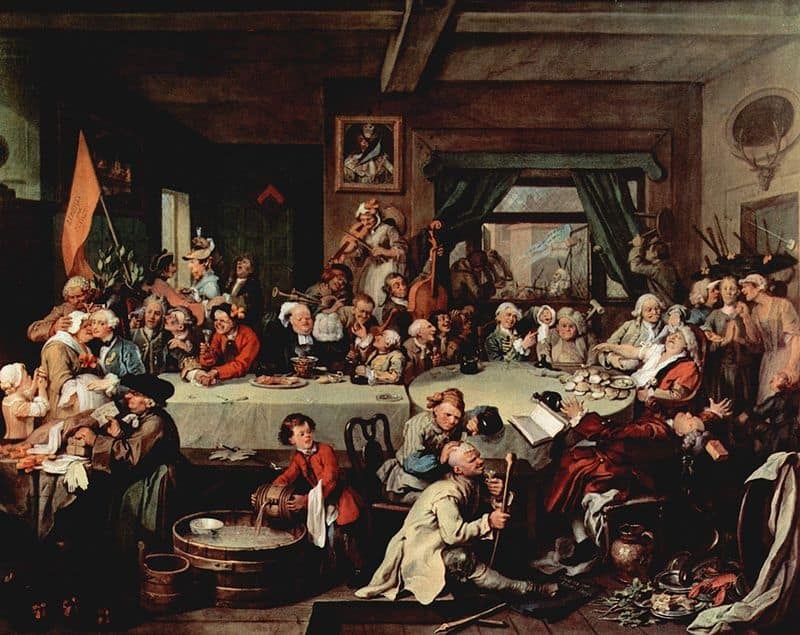
A drunken reveler is assisted by friends during the Roman Saturnalia. Wikimedia
Here are some Christian holidays, beliefs, and rituals which are based upon pagan celebrations and beliefs, in both their timing and their traditions.
10 Christian Holidays and Beliefs Steeped in Pagan Traditions
The Gregorian calendar established January 1 as New Year’s in most countries, though the British opposed it until 1752. Wikimedia
New Year’s Day
As early as 2000 BCE the Mesopotamians celebrated the New Year, but the timing of the celebration was centered on the vernal equinox, in March. The first calendar of the Romans, which contained only ten months in a solar year, placed the start of the year as March 1. The last four months of today’s calendar reflect their position in the year through their names; September contains Septem, Latin for seven, October, Octo meaning eight, and so on. The exact time of the appearance of the months January and February is uncertain, but they were originally placed at the end of the year, rather than at the beginning.
The Roman celebration of Saturnalia, which centered on the winter solstice, spread with the growth of the empire. Exactly when the celebration of the New Year came to be placed at the first of January is disputed, but by 153 BCE much of the Roman Empire was using that date to salute the beginning of a new solar year. This continued through the first five centuries following the birth of Christianity, and in 567 CE the Council of Tours officially banned January 1 as the start of the New Year. Instead, the date of the New Year floated throughout medieval Europe, dependent on the calendar used in differing regions, some using December 25, some March 1, and some other dates, all of which were selected for their astrological significance.
The Gregorian calendar, which appeared in 1582, corrected errors in the Julian calendar and returned the start of the year to January 1. It also made January 1 the date on which Roman Catholics celebrated the Feast of the Circumcision. January 1 was thus established as the eighth day of the Christmas season in the Roman Catholic calendar. While Catholic nations adopted the Gregorian calendar immediately, as demanded by a Papal Bull, most protestant nations did not. Great Britain (and its American colonies) did not adopt the Gregorian calendar until 1752. Until that time New Year’s Day remained in March in the British Empire.
In selecting January 1 as the New Year and a feast of the Christmas season, the Gregorian calendar marked a date which was already a day of celebration among the Christian community, absorbed by them from pagan rituals which celebrated the restoration of the sun. The winter solstice is the shortest day of the year in the Northern Hemisphere, immediately following it the days begin to grow longer in terms of hours of sunlight, and it was this which had been celebrated in the ancient world. The Gregorian designation of the date as a religious feast did little to impair the celebration of the return of the sun, or the traditions it established.
Under the Gregorian calendar, New Year’s Day remains the octave of Christmas, but many other cultures and religions celebrate other days as the New Year, including China, Southeast Asia, India, and in Islam (which uses a lunar, rather than solar, calendar causing New Year’s Day to float). Although officially a solemn religious holiday in the eyes of several Christian Churches, the celebration of New Year’s Day and Eve are more given over to hedonistic pursuits, as it was before the date was selected to be a major feast day of the Roman Catholic and Christian calendar.
Valentine’s Day
February 14 is commemorated as Valentine’s Day, or St. Valentine’s Day in the calendar of the Anglican and Lutheran Churches, although in the Roman Catholic Church it was relegated to local status in Calendar of Saints, removed as a feast day, “since, apart from his name, nothing is known of Saint Valentine except that he was buried on the Via Flaminia on February 14.” Though there were several early Christian martyrs named Valentinus or Valentine, little is known of any of them beyond legend. In 496 CE, Pope Gelasius added Valentine of Rome to the Calendar of Saints, with a Feast Day of February 14, citing his martyrdom in Rome in 269 CE.
February 14 coincided with the Roman celebration of the Lupercalia, which took place February 13-15 and was officially condemned by the same Pope Gelasius. Lupercalia was as old, or older, as Rome itself, with links to Ancient Greeks, who celebrated the god, Pan. The Romans worshiped a similar god named Lupercus. Both civilizations used symbols for gods based on wolves. Lupercalia as a festival was limited to Rome, and rituals connected with the festival used the Lupercal, the cave where Romulus and Remus were nursed by a she-wolf named Lupa, the Palatine Hill, and the Forum, sites associated with Rome’s founding.
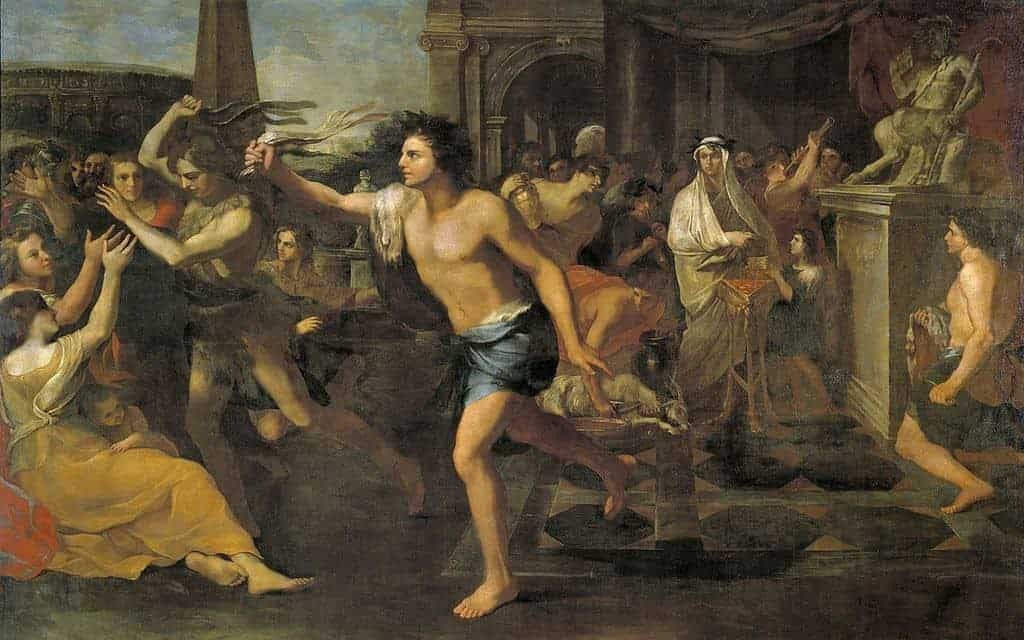
The rituals of Lupercalia included the slaying of sacrificial dogs and goats, the anointing of designated celebrants with the blood of the sacrifice, and then the manufacturing of crude thongs from the skin on the animals. Following a sacrificial meal the thongs were donned, and celebrants, clad only in the thongs, ran around a circle which included Palatine Hill and the Forum, before returning to the Lupercal cave. Those they encountered during their run were slapped with the ends of the thongs, believing that this would lead to fertility, or in the case of women already pregnant, successful birth. When Pope Gelasius tried to end the festival, the Senate opposed him.
Gelasius wrote that the festival was attended by “vile rabble” but in the face of opposition from the Senate he could not outright ban it. The creation of a feast day to an early Christian (and Roman) martyr was a means of limiting the Lupercalia. There was nothing to connect the Roman Valentine with romantic love at the time, and in medieval Europe, the feast was connected more with the coming of spring than with lovers. That changed in the England of Geoffrey Chaucer, with the emergence of courtly manners among the gentry. Legends of Valentine began to be merged with the fertility and romantic aspects of the Roman festival.
Saint Valentine, or the several different legends of men named Valentine, had nothing in his or their lifetimes to connect them to the holiday as it is celebrated today. Even their existence is murky. On the other hand, the records of the fertility festival of the Lupercalia in Rome are recorded even before the First Republic and were commented on by Plutarch, Tertullian, and other ancient writers. Whether the establishment of a feast for a martyr of which little is known as an attempt to subvert a pagan ritual or to replace it is a matter of conjecture, but it today has more to do with romantic relationships than a martyr of the church.
Carnival
Carnival was the period between the end of the Christmas season and the beginning of Lent, which occurs in northern climes in the dead of winter. During pagan times and emerging into the folklore of central and western Europe, this was a period in which heavy consumption of food was simply a matter of survival, in order to ward off the period of darkness associated with the shorter days of winter. As the days began to grow longer, consumption was increased, especially among the Germanic tribes, to both drive back the evil incarnate in the darkness and encourage the return of the light. As Christianity emerged and the lengthy fast of Lent became a requirement, the folklore remained.
The stocks which were harvested in the fall would not last through the end of the Lenten period, so they were required to be consumed before the fast began, to preclude their going to waste. As the calendar drew closer to the commencement of Lent the consumption increased. Sexual activity was curtailed as part of the Lenten fast, thus it was increased prior to Lent and a corresponding increase among the populace occurred. During the Middle Ages, the Church protested against the pagan practices which increased as the season of Lent approached, leading to the practice of appearing in public disguised, often in the skins of animals, which was a sin in the eyes of the Church.
In the sixth century, the official period of fasting was designated to begin on Ash Wednesday, and Pope Gregory the Great determined that the period of relative gluttony known as Carnival was necessary to the Church Calendar, creating a clear demarcation from the period of fasting and self-denial, Lent. Carnival spread through the Catholic countries and eventually to North and South America through New Spain and New France. In 1466 elements of the ancient Saturnalia festivals of Rome were merged with Carnival by Pope Paul II, requiring Jews, after being fed heavy meals, to run naked through the streets of Rome.
During the 18th and 19th centuries elements of the Saturnalia remained a part of the Carnival of Rome, and anti-Semitic features remained prevalent. Rabbis of Rome’s Jewish communities were required to wear clothes or costumes which brought ridicule on themselves, while they endured the ensuing taunts and abuses of the crowds. When Pope Gregory XVI was petitioned to stop the anti-Semitic aspects of the Rome Carnival in 1836 he responded, “It is not opportune to make any innovation.” Carnival was the necessary period of sin, to be atoned for during lent, and freed from by Easter and Pentecost.
Carnival began as a period of consumption by necessity, became a pagan ritual yet again associated with the rebirth of the Sun, was absorbed into the Christian calendar after years of opposition, and eventually became a largely secular festival of a few days preceding Lent. In some locations, such as New York in the United States and in the United Kingdom, it is celebrated without regard to the Christian calendar, with some areas celebrating it in June and others over Labor Day. In Toronto, Canada, it is held on the first weekend of August. Mardi Gras in New Orleans and several other cities in the Mississippi remain part of the Carnival tradition, celebrated in the days before Ash Wednesday.
The Immortality of the Soul
The immortality of the human soul is a belief of Christianity, one of its core tenets, and one that is based in pagan beliefs that well preceded those of the early Christians. The ancient Babylonians and Egyptians believed in life after death and a path to heavenly reward. The Egyptians worshiped the god Osiris, who was killed but brought back to life. Osiris offered the possibility of new life after death was the judge of the dead, and was thus associated with the cycles of life and death seen in nature, such as the changing of the seasons. After he was brought back to life he was elevated to some form of an afterlife in heaven, which the Egyptians believed he had opened for all who followed him.
The Egyptians came to believe that when a person died his spirit or soul began a journey to a Hall of Judgment, where they would be presented to Osiris, who was assisted with forty-two associates in the form of lesser gods. There they would be able to present their case for entry into eternal life. Those who failed, finding the balance of the scales of justice to be against them, were instead delivered to the underworld, to be torn to pieces by a demonic torments. Thus the concept of heaven and hell, and judgment before a savior, were parts of pagan beliefs in Egypt long before they were part of the Christian canon, which is infused with many similarities.
The pagan beliefs of a savior whom they could follow into an eternal afterlife arose spontaneously in religions throughout the ancient world, including in the Americas. In Europe, they traveled from Egypt and Babylon to Greece, from Greece to Rome and to the emerging Christian communities. The promise of a heavenly reward to the faithful was a feature of many ancient beliefs far removed from Christianity or the Judaism from which it arose following the life and death of Jesus. But in early Christianity and in Judaism the teaching was of an earthly reward following the coming of the Messiah in the latter and the return of Jesus in the former.
The Babylonian teachings of the goddess Ishtar (pronounced Eeshtar) included her bearing a son who died every year to experience a rebirth in the spring. Ishtar was venerated as the Queen of Heaven by the Babylonians and the Assyrians, among others, and was known to the Sumerians as Inanna. The Greek goddess Aphrodite contains many similarities to the legends and myths surrounding Inanna-Ishtar, and early Christians in the lands of the Middle East assimilated many of the traditional stories of Ishtar into those of the Virgin Mary which arose there, rather than in the Church in Rome.
Thus as Christianity spread during the first five centuries of the Common Era pagan rituals, traditions, and beliefs merged with the spread of Christian theology, which absorbed many of them into its own traditions, rather than replace them with new ideas and customs. The burning of incense, used by pagans to drive away evil spirits, remained and remains an intrinsic part of many Christian ceremonies. So does the use of candles, of an altar, and the preparation and presentation of a sacrifice as part of religious worship, all of which had roots in pagan ceremonies and celebrations.
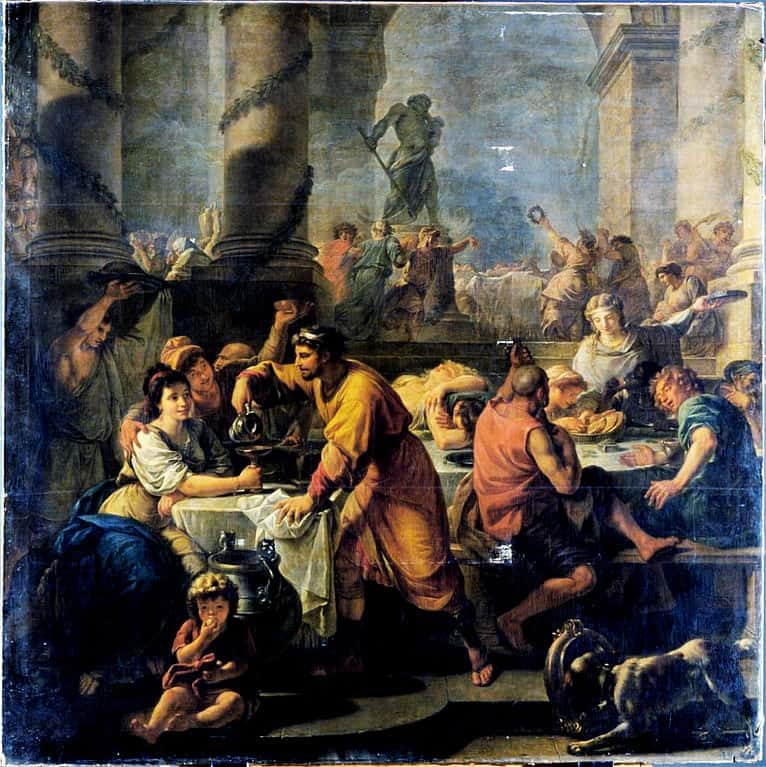
The Roman Saturnalia and Christmas
Prior to the reign of Pope Julius I, the birth of Jesus of Nazareth had been ascribed to several different dates of the calendar, including in December, January, March, and June. The biblical description of the event indicated that it was likely not in winter – shepherds would not be tending their flocks in the fields in December or January – and the description of the census being conducted indicated that it was likely in summer when travel would be easier for all citizens to return to the towns of their birth to be counted. Nonetheless Julius I selected December 25 as the date of the birth of Jesus, which corresponded not with a Roman census, but with the Roman festival of Saturnalia.
Saturnalia was a pagan festival which covered roughly the fourth week of December. The Roman god Saturn celebrated by the festival was the god of the harvest, and Saturnalia was about conspicuous consumption of food and drink. During its celebration, no prisoners were executed, and some were granted release. Masters served their slaves at the table during one point of the festival, and a slave was elected to serve as the King of the celebrations. Public feasts were held, and gifts were exchanged, some of them to public associates as jokes, while gifts given privately to family and friends were often of a more substantive nature.
Public business was suspended during the festival, which expanded from the original one-day celebration to one of a week over time. Schools were closed. Gambling was allowed, and slaves were allowed to gamble with their masters, often for stakes which included fruits and nuts. While many Roman festivals required access to the public sites of Rome, such as the Forum, the Colosseum, or the Palatine Hill, much of Saturnalia could be celebrated in the home, and it was thus celebrated throughout the Empire, with the official ceremonies only taking place in Rome, at the Temple of Saturn. Candles were lit to mark the days of the festival as it transpired.
When Julius I declared December 25 to be the birth date of Jesus he tied it in with the pagan festival, perhaps accidentally, and perhaps with the hope that it would provide an alternative holiday for Roman Christians, rather than celebrating the pagan god Saturn. Regardless the celebration of Christmas for the next few centuries coincided with the celebration of the winter solstice, which gained momentum as it coincided with several other pagan celebrations of the solstice in Europe. Christmas in Europe during the Middle Ages was celebrated with overeating, heavy drinking, gambling, and the exchange of gifts, as well as religious ceremonies.
Not until the Protestant Reformation would attempts be made to eliminate the pagan influences during the celebration of what was by then the Christmas holidays, including the Feast of the Holy Innocents, the Feast of the Circumcision, Epiphany, also known as Twelfth Night, and Candlemas. The Puritans banned many of the practices dating to Saturnalia, and throughout Europe some of the old traditions died out. Some later returned. The practices of exchanging gifts, lighting candles (Advent wreaths) and other activities enjoyed during Saturnalia, a pagan festival of the winter solstice, remain part of Christmas today.
