
What happens when society's "invisible people" become heroes for a couple hours every week?
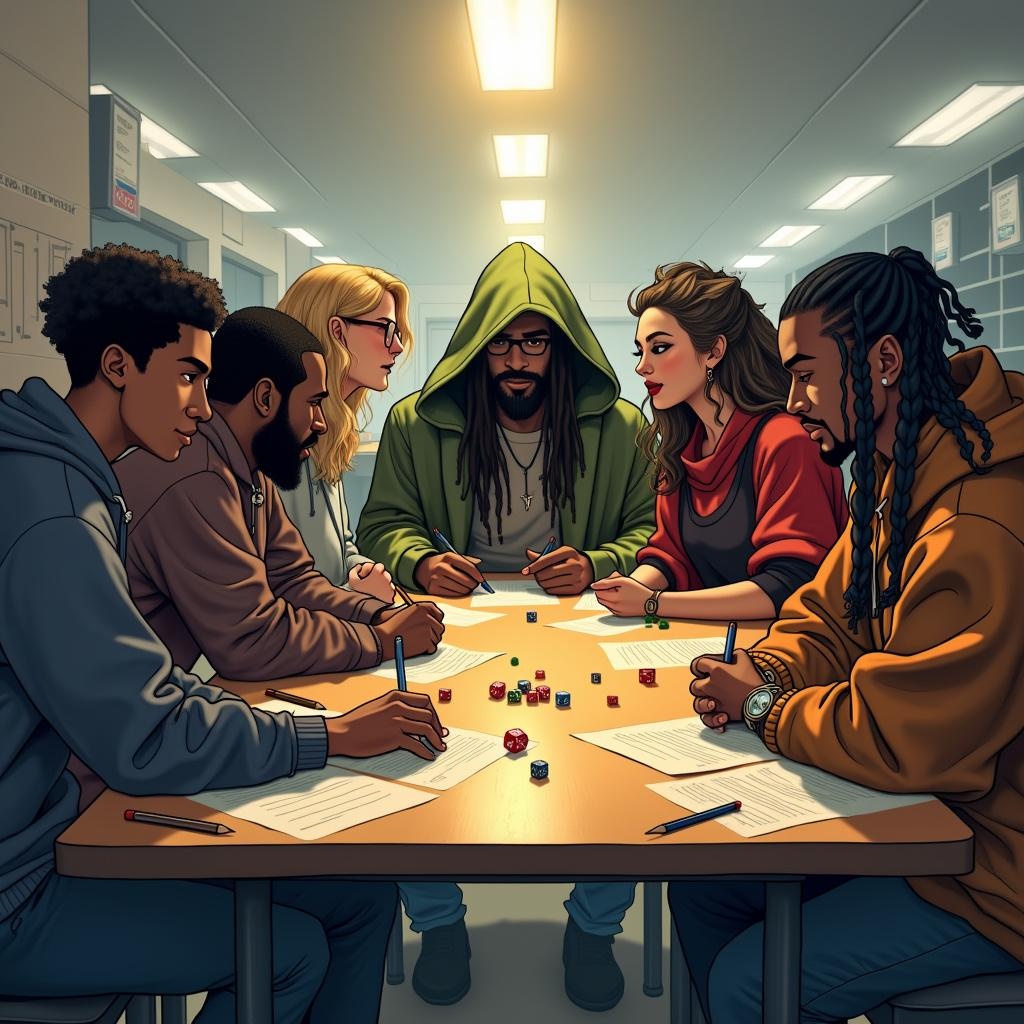
The fluorescent lights buzz overhead in the Salvation Army dining hall. Most people have finished their dinner and scattered—some to catch another replay of Gunsmoke on the lobby TV, others to make calls on the shared phone that sits on the lobby table.
But six of us remain at table four.
We're about to save the world.
When Reality Becomes Too Real
"I roll for initiative," says Marcus, a 45-year-old former business owner whose company went under during COVID. His hands shake slightly—not from nerves about the imaginary dragon we're facing, but from withdrawal. He's been clean for two weeks now.
Natalie, sitting across from him, adjusts her character sheet. Three months ago, she was sleeping in her car with her two kids after fleeing an abusive marriage. Tonight, she's Santa Claus with a magic sleigh and unshakeable jolly spirit.
This is what magic actually looks like.
Not the kind with spell components and saving throws, but the kind that transforms a cafeteria table into a portal away from case worker appointments, shelter curfews, and the endless, exhausting work of rebuilding your life from scratch.
The Heroes We Needed to Be
Every Saturday at 6 PM—right after dinner ends at 5:30—our little group gathers for what has become the most important three hours of our week. We've been playing the same campaign for four months now—longer than some of us have had stable housing.
Our characters:
Kim Possible (played by Sharon, a 30-year-old with a rare bone disease)
Santa Claus (played by Natalie, learning to trust again)
The Hulk (played by Johnny, channeling his anger constructively)
Scanlan Shorthalt (played by Jenny, 19 and aging out of foster care)
Dungeon Master (played by David, a veteran with PTSD who guides our adventures)
What We've Learned About Heroes
Here's the thing about D&D that nobody tells you: every hero starts with nothing.
Level 1 characters are vulnerable, under-equipped, and usually broke. Sound familiar?
But here's what they have that money can't buy:
Agency - Every roll of the dice represents a choice
Community - No one succeeds alone in D&D
Growth - Every challenge survived makes you stronger
Hope - There's always another quest, another chance
When Johnny rolls a natural 20 to save a village from bandits, something shifts in his shoulders. When Natalie's Santa Claus successfully intimidates a corrupt noble, she sits up straighter. When David's cleric heals our wounded party, he remembers what it feels like to be needed.
We're not just playing characters. We're practicing being the people we want to become again.
The Economics of Imagination
Our entire campaign runs on:
A dice app on Natalie's Android phone (passed around for each person's turn)
Character sheets handwritten by our game master David
Pencils from Publix ($3.79 plus tax, courtesy of a Facebook friend's Venmo)
Books borrowed from friends and the internet
Pure imagination
Total monthly cost: $4.07
Value to our mental health: Priceless
Compare that to therapy (if we could afford it), medication (when we can get it), or any other coping mechanism available to people in our situation. D&D might be the most cost-effective mental health intervention ever invented.
Why This Matters Beyond Our Table
Every night in America, over 580,000 people experience homelessness. The majority are invisible to most of society—not the stereotypical image of homelessness, but people like us:
Families displaced by economic hardship
Individuals fleeing domestic violence
Veterans struggling with invisible wounds
People recovering from addiction
Young adults aging out of foster care
We're not statistics. We're people with stories, dreams, and the capacity for heroism.
Our D&D table proves something important: given the smallest opportunity to imagine better circumstances, people will choose hope over despair, community over isolation, growth over stagnation.
The Real Magic
Last week, Natalie got approved to bring her husband and child to the shelter to live in the coming weeks. She starts a new job on Monday—her first in two years. Johnny is three weeks clean and has his first interview since losing his business. Jenny got accepted to community college with financial aid.
Did D&D cause these breakthroughs? Of course not.
But did it give us a space to practice being brave, making good choices, and supporting each other through impossible odds?
Absolutely.
What You Can Do
If this story moved you, here are concrete ways to help:
Support local shelters - Many would welcome donated games and activities
Volunteer as a DM - Share your skills with communities that need them
Donate gaming supplies - Dice, books, and character sheets go far
Challenge stereotypes - Homelessness has many faces
Share this story - Visibility creates change
The Adventure Continues
Our campaign isn't over. Neither are our real-life stories.
Every Saturday, we'll gather around that cafeteria table. We'll roll dice and make choices and remind each other that heroes come from the most unlikely places.
Because sometimes the most important dungeon you escape is the one in your own mind.
If you want to follow our ongoing adventures—both fictional and real—subscribe below. I promise to keep rolling for hope, no matter what the dice say.
Tags: #DungeonsAndDragons #Homelessness #Community #MentalHealth #Gaming #SocialJustice #Hope #TableTop #RPG
If this one stayed with you, you might also like:
Finding Magic in the Midst of Struggle ✨