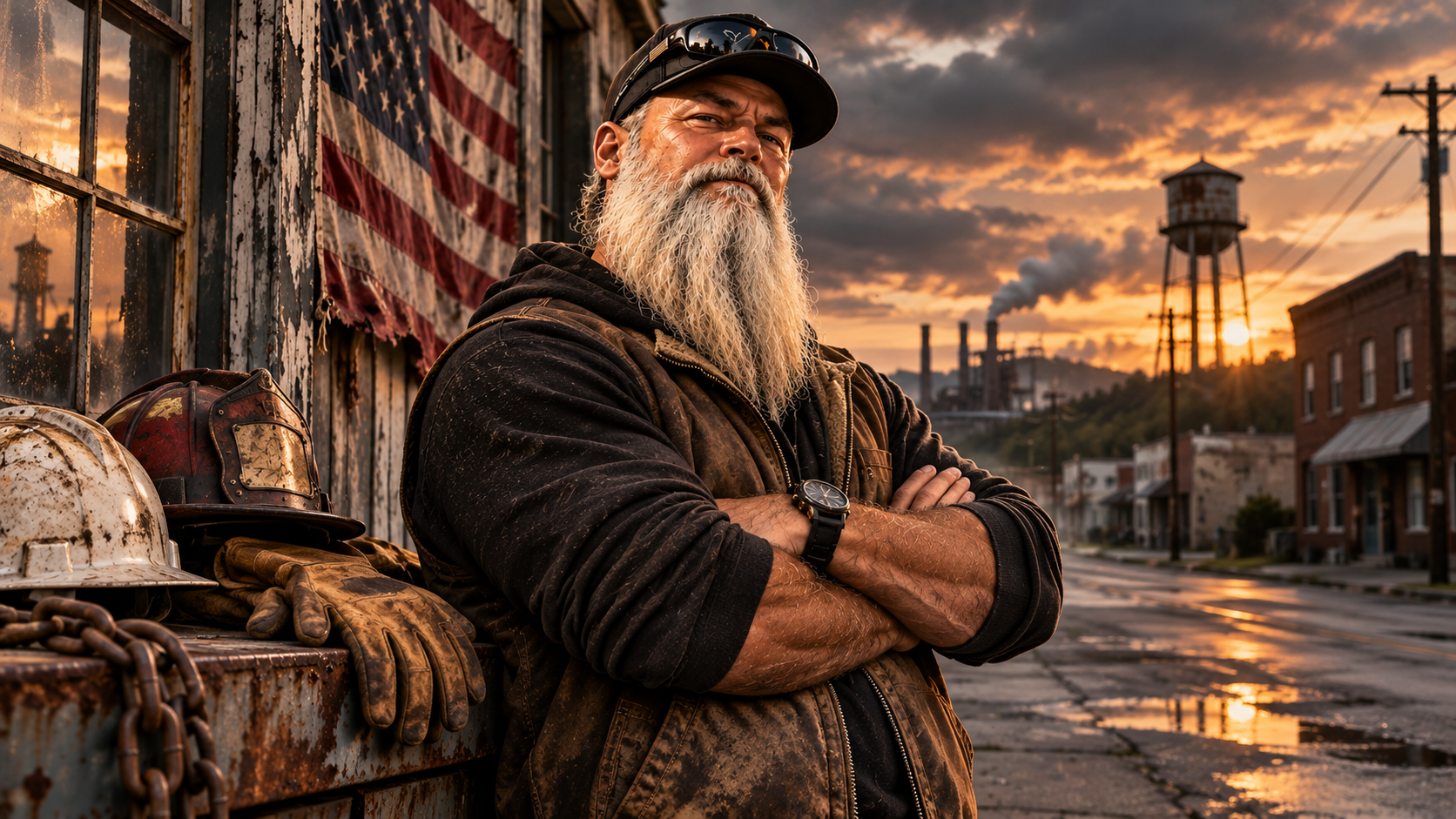

There are a lot of White men in this country who feel like strangers in the places they helped build. I am not talking about men looking to be celebrated because they are White. I am talking about ordinary men who showed up, kept their word, worked, paid taxes, raised children, served when called, fixed what broke, built businesses, kept communities running, and believed there was still a basic understanding between them and the country they built.
Do your part. Carry your weight. Take care of your family. Contribute. Stand up when needed. In return, you expected to be treated as a citizen and as a man, not as a racial category somebody else had already decided how to judge.
A growing number of White men no longer believe that bargain exists.
Race and gender have been reintroduced into targeted and exclusionary decisions about employment, education, advancement, representation, and opportunity. The language surrounding it may have changed, but White men can see when race and gender are being used to determine who gets considered, who gets promoted, who gets encouraged, who gets represented, and who gets pushed farther down the list.
Federal employment law does not contain an exception saying discrimination becomes acceptable when the person on the receiving end is a White man. In 2025, the Equal Employment Opportunity Commission and the Department of Justice warned employers that DEI programs can violate federal law when employment decisions turn on race or gender. In 2026, the EEOC sued The New York Times over allegations that a qualified White male employee was denied a promotion because of race or gender. That case has not been finally decided, but the issue behind it is simple enough. A White man does not stop having rights because somebody decided discrimination against him serves a larger social goal.
For years we were told that judging people by skin color was wrong. Then universities, corporations, government offices, media organizations, and advocacy groups began building systems where race and gender became central considerations again. Representation targets appeared. Employees were sorted into identity categories. Consultants built entire industries around privilege, bias, equity, and demographic outcomes that absolutely excluded White men. White men watched all of this happen while being told that questioning any part of it was evidence that they were racist, priviledged, and simply didn't understand.
White men understand when they're being excluded from programs based on gender or race. They understand when representation matters until the person being represented is a White man. They understand when corporate messaging celebrates identity but becomes uncomfortable when a White man speaks positively about his own ancestry, family, culture, or history. They understand when a young White man with no power over anybody is spoken to as though he arrived carrying a debt for things that happened before he was born.
Pew found in 2024 that Americans were more likely to say workplace DEI practices hurt White men than helped them. Thirty six percent overall said those practices hurt White men, and among White adults the number was forty seven percent. Institutions can debate what produced those perceptions, but they cannot make them disappear by calling the people who hold them ignorant, angry, or threatened by progress.
This that goes well beyond DEI.
White men have spent years hearing that masculinity itself is something that needs to be softened, corrected, explained, or restrained. Traits that many men were raised to respect, strength, competitiveness, independence, assertiveness, toughness, protectiveness, physical courage, are increasingly discussed as though there's something suspicious about them because they're masculine.
A lot of White men feel that difference has been deliberately blurred.
Be strong, but not too strong. Be confident, but make sure your confidence does not make anyone uncomfortable. Be assertive, but understand that assertiveness can be interpreted as aggression. Protect yourself, but know that if a confrontation happens, people may decide what role you played before they know what actually happened.
That matters.
There are White men who believe they can be defending themselves, their home, their family, their business, or simply responding to somebody else's aggression and still find themselves immediately cast as the aggressor. It's happened. We've seen and lived it.
That does something to a man over time.
So does being told that pride itself is suspicious.
A White man can love the people he came from. He can respect his father and grandfather. He can be proud of the work his family did, the community they helped build, the wars they fought, the businesses they started, the churches they attended, the farms they worked, the families they raised, and the traditions they passed down.
Yet plenty of White men have learned that saying they're proud to be White can immediately bring accusations of racism, hatred, and toxic ideology. That changes the way men speak. Eventually it changes whether they speak at all.
Some stop talking about their heritage. Some stop talking about their concerns. Some decide there is no point explaining themselves because the conclusion has already been reached before they open their mouth.
Then we wonder why resentment grows.
White men are also discussed far too often as though being White automatically tells you how much power, money, opportunity, or influence a particular man has had, or what debt and how much belongs to them. It does not.
There are White men with money and White men without. White men who inherited something and White men who inherited debt. White men with influence and White men nobody listens to. White men who had good fathers and White men who never knew theirs. White men who had every opportunity and White men who spent most of their lives surviving one setback after another.
Calling all of us privileged does not explain our lives. It erases them.
A man working two jobs to keep the mortgage current does not experience his life as an abstract racial theory. Neither does the man whose business failed, whose body is worn down, whose marriage is falling apart, whose son cannot afford a home, or whose daughter is buried under debt.
He experiences his life as his life.
And when institutions insist on seeing him primarily through the "he's White" lens, while simultaneously telling him that he should not think about his own race, gender, and culture, he notices the contradiction.
A man can carry a heavy load when he believes what he is carrying has meaning. Work matters more when the company values you. Sacrifice matters more when the country respects you. Responsibility means more when your family sees more than the paycheck you bring home.
The company still wants his labor, but he wonders whether he is becoming the wrong demographic for advancement. Government still wants his taxes and compliance. The country still expects him to answer when things go bad. His family may still depend on him to earn, fix, protect, solve, and provide.
At the same time, he hears that men like him have too much privilege, too much power, too much masculinity, too much confidence, too much influence, or simply too much of a past somebody else wants him to answer for.
That's a hell of a contradiction.
White men should not be pretending none of this bothers them.
All things have a breaking point.
It breaks when a White employee wonders whether race or gender, counted against him in a promotion. It breaks when a young White man is taught to see his ancestry primarily through guilt. It breaks when masculinity is discussed as something inherently dangerous instead of something that can be directed toward responsibility, courage, protection, discipline, work, fatherhood, and service. It breaks when a White man feels that defending himself will still leave him explaining why he was not the aggressor.
A White man should be able to stand tall and be comfortable with who he is. He should be able to speak plainly about policies he believes discriminate against him. He should be able to question institutions that classify him by race and gender. He should be able to defend himself without feeling obligated to apologize for being physically strong or assertive. He should be able to be masculine without treating masculinity as a character defect.
He should also be able to say he is proud to be White.
Proud of his father. Proud of his grandfather. Proud of what his family survived. Proud of the work they did. Proud of his community. Proud of the country his family helped build and defend. Proud of the life he has built himself.
Proud of his heritage, and history.
Know where you came from. Know what your family built. Know what you have built yourself. Do not accept responsibility for things you did not do simply because somebody demands you be resposible for an event you weren't alive, or didn't prticipate in.
Never apologize for being White.
What I see is a growing number of White men who no longer trust institutions that continue asking for their loyalty. Employers want their work. Government wants their money. Political parties want their votes. Communities want their service. Families need their strength.
Loyalty and respect are not a one way road.
When a man begins to believe an institution values what it can take from him more than it values him, he changes. He stops giving that institution the benefit of the doubt. He stops believing its slogans. He stops assuming the people running it have his interests anywhere on their list.
This is not extremism.
This is what it looks like when the system you built, people you protect, families you provide for turn on you for social credit bonus points.
And trust will not be repaired by another seminar, campaign, slogan, consultant, representation chart, or lecture about why White men should understand the reasons they are being treated differently.
If institutions want the trust of White men, then they are going to have to earn it.
Stop expecting White men to remain loyal forever to institutions they increasingly believe would never show the same loyalty to them.
White men are here.
We have histories. Families. Communities. Accomplishments. Responsibilities. Pride. Grievances. And a future we have every right to care about and be a part of.
We do not need permission to stand tall, proud, and masculine.
I am a Proud White man, and I give no fucks if you don't like it.
Jack
Built by work. Shaped by miles. Told straight