
How manipulative design patterns cost Amazon $2.5B — and why developers should care
The $2.5 Billion Wake-Up Call
In September 2024, Amazon settled a Federal Trade Commission (FTC) lawsuit for $2.5 billion. Their crime? Using “dark patterns” to manipulate users into Prime subscriptions. This wasn’t just a design failure — it was a watershed moment for the tech industry.
For frontend developers, the message is clear: the interfaces we build have real-world consequences. And when those interfaces deceive users, the costs — financial, reputational, and ethical — are enormous.
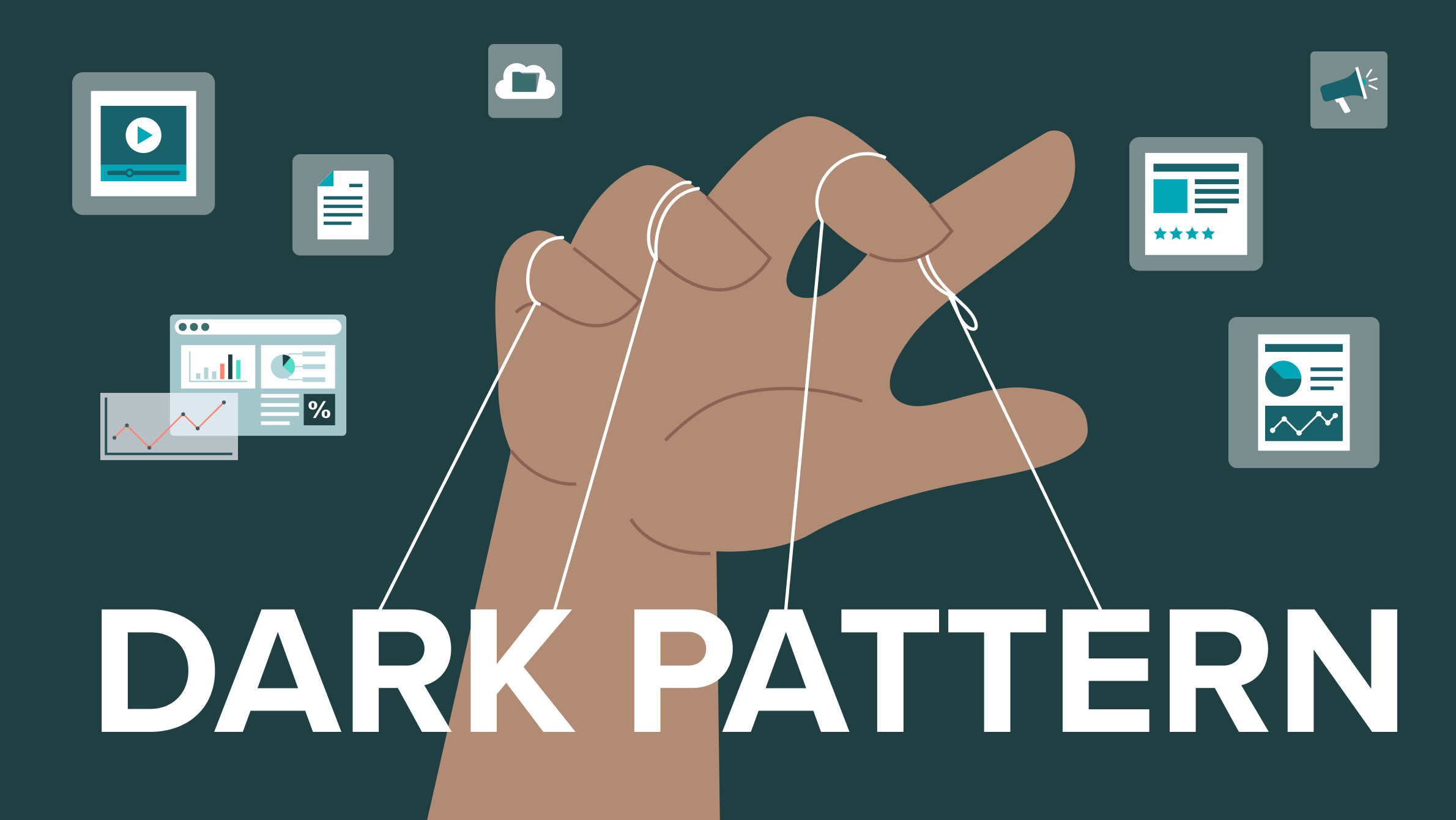
What Are Dark Patterns?
Harry Brignull coined the term “dark patterns” in 2010 to describe UX designs that trick or manipulate users into unwanted actions. According to Selam Moges, a software engineer at Apella who spoke at the International JavaScript Conference, these patterns aren’t always intentional.
“Most developers aren’t waking up deciding to trick users, but when we prioritize growth at all costs without questioning the design, we risk embedding manipulation into the product by default.”
The Most Common Dark Patterns
1. Hidden Costs (Bait and Switch)
What it is: Advertised prices that balloon at checkout with unexpected fees.
Example:
// ❌ Bad: Auto-adding insurance without consent
const calculateTotal = (basePrice: number) => {
  const insurance = 29.99; // Automatically added
  const processingFee = 15.00; // Not disclosed upfront
  return basePrice + insurance + processingFee;
};
// ✅ Good: Transparent, opt-in pricing
const calculateTotal = (
  basePrice: number,
  options: { insurance?: boolean; expedited?: boolean }
) => {
  let total = basePrice;
  if (options.insurance) total += 29.99;
  if (options.expedited) total += 15.00;
  return total;
};
2. Visual Interference (Confirmshaming)
What it is: Using design elements to shame or manipulate user choices.
Example:
// ❌ Bad: Manipulative button copy
<Button variant="primary" size="large">
  Yes, I want to save money! 💰
</Button>
<Button variant="text" size="small" color="gray">
  No, I prefer paying full price
</Button>
// ✅ Good: Neutral, balanced options
<Button variant="primary">
  Subscribe to Newsletter
</Button>
<Button variant="secondary">
  Continue Without Subscribing
</Button>
3. Roach Motel (Easy In, Hard Out)
What it is: Making subscription easy but cancellation nearly impossible.
Real-world example: Apple’s unsubscribe flow:
Open Settings app
Tap your name at the top
Tap “Subscriptions”
Select the subscription
Tap “Cancel Subscription”
Confirm cancellation
Compare this to a one-click “Subscribe” button. The asymmetry is intentional.
Better approach:
// ✅ Good: Symmetrical subscribe/unsubscribe
const SubscriptionControl = ({ isSubscribed }) => {
  return (
    <div className="subscription-card">
      {isSubscribed ? (
        <Button
          onClick={handleUnsubscribe}
          variant="secondary"
        >
          Unsubscribe
        </Button>
      ) : (
        <Button
          onClick={handleSubscribe}
          variant="primary"
        >
          Subscribe
        </Button>
      )}
    </div>
  );
};
4. Forced Continuity
What it is: Charging users after a free trial ends without clear warning.
Example:
// ❌ Bad: Silent conversion
const startFreeTrial = async (userId: string) => {
  await createSubscription(userId, {
    status: 'trial',
    autoRenew: true, // Hidden default
    trialEnds: addDays(new Date(), 30)
  });
};
// ✅ Good: Explicit consent and reminders
const startFreeTrial = async (userId: string, consent: TrialConsent) => {
  if (!consent.acknowledgedAutoRenewal) {
    throw new Error('User must acknowledge auto-renewal');
  }

  await createSubscription(userId, {
    status: 'trial',
    autoRenew: consent.wantsAutoRenewal,
    trialEnds: addDays(new Date(), 30)
  });

  // Schedule reminder emails
  await scheduleReminders(userId, [
    { daysBeforeEnd: 7, type: 'trial_ending_soon' },
    { daysBeforeEnd: 1, type: 'trial_ending_tomorrow' }
  ]);
};
Two Cautionary Tales
Facebook/Cambridge Analytica: The $5 Billion Mistake
The Problem: Facebook allowed third-party apps to harvest data from 87 million users without explicit consent. Users had no idea their data was being used for political advertising.
The Fallout:
$5 billion FTC fine
Complete API overhaul
Retrofitted privacy controls
Massive reputational damage
Sparked GDPR enforcement and Congressional hearings
The Lesson: Fixing dark patterns after the fact is exponentially more expensive than building ethically from the start.
Apple’s ATT: Doing It Right
The Problem: Apps tracked users across platforms without permission, eroding mobile trust.
The Solution: In 2021, Apple introduced App Tracking Transparency (ATT) — a simple, non-coercive prompt asking users for explicit permission.
// Apple's ATT implementation
import AppTrackingTransparency
ATTrackingManager.requestTrackingAuthorization { status in
    switch status {
    case .authorized:
        // User opted in
    case .denied, .restricted, .notDetermined:
        // User declined or status unknown
    }
}
The Results:
✅ Positioned Apple as privacy-first
✅ Increased user trust and loyalty
✅ Strengthened ecosystem retention
✅ Set new industry standards
Why Developers Must Care
1. You’re the Last Line of Defense
Designers create mockups. Product managers set metrics. But developers implement the actual behavior. You can:
Question manipulative requirements
Suggest ethical alternatives
Refuse to implement deceptive patterns
2. You’ll Be Cleaning Up the Mess
When dark patterns backfire (and they do), developers bear the burden:
Emergency code refactors
Compliance retrofits
Database migrations for consent models
API redesigns
3. Your Reputation Is on the Line
The GitHub profile with “implemented deceptive checkout flow” isn’t the portfolio piece you want.
Building Ethically: A Developer’s Checklist
## Before Shipping Any Feature
- [ ] Can users understand what they're agreeing to?
- [ ] Is opt-out as easy as opt-in?
- [ ] Are all costs disclosed upfront?
- [ ] Would I be comfortable if my parents used this?
- [ ] Does this pass the "New York Times test"? (Would I be embarrassed if this was front-page news?)
- [ ] Are we collecting only necessary data?
- [ ] Do users have clear control over their data?
- [ ] Are confirmations clear and unbiased?
Practical Examples: Light vs. Dark
Consent Forms
// ❌ Dark Pattern: Pre-checked boxes
<Checkbox defaultChecked name="marketing">
  Send me promotional emails
</Checkbox>
<Checkbox defaultChecked name="dataSharing">
  Share my data with partners
</Checkbox>
// ✅ Ethical Design: Explicit opt-in
<Checkbox name="marketing">
  I want to receive promotional emails (optional)
</Checkbox>
<Checkbox name="dataSharing">
  I consent to sharing my data with trusted partners (optional)
</Checkbox>
<p className="text-sm text-gray-600">
  You can change these preferences anytime in your account settings.
</p>
Urgency Tactics
// ❌ Dark Pattern: Fake scarcity
<Alert variant="warning">
  ⚠️ Only 2 rooms left at this price!
  {/* Actually showing this to all users */}
</Alert>
// ✅ Ethical Design: Honest information
<Alert variant="info">
  💡 This property is popular and frequently books up.
  {/* Only shown if actually low on inventory */}
  {availableRooms <= 5 && (
    <span>Currently {availableRooms} rooms available.</span>
  )}
</Alert>
Account Deletion
// ❌ Dark Pattern: Maze of prevention
const deleteAccount = () => {
  showModal("Are you absolutely sure?");
  // Then: "You'll lose all your data!"
  // Then: "Your friends will miss you!"
  // Then: "Enter password to confirm"
  // Then: "Wait 30 days for deletion"
};
// ✅ Ethical Design: Clear and respectful
const deleteAccount = async () => {
  const confirmed = await showModal({
    title: "Delete Account",
    message: "This will permanently delete your account and data.",
    actions: [
      { label: "Cancel", variant: "secondary" },
      { label: "Delete Account", variant: "danger" }
    ]
  });

  if (confirmed) {
    await deleteUserData();
    showToast("Account deleted. You can create a new account anytime.");
  }
};
The Business Case for Ethical Design
“But dark patterns boost conversions!” Yes, short-term. Here’s what they cost long-term:
Dark PatternsEthical Design$2.5B settlement (Amazon)User trust and loyalty$5B fine (Facebook)Positive brand reputationLegal battles and retrofitsSustainable growthUser resentment and churnRegulatory compliance by defaultNegative press coverageDeveloper pride and retention
The Evolution of Manipulation
Dark patterns aren’t new. Moges traces them to pre-internet sales tactics:
Bait-and-switch advertising
Fine print in contracts
Infomercials exploiting urgency
What changed? The mid-2000s A/B testing boom created a “conversion-obsessed culture.” UX became weaponized. Metrics like “time on site” and “retention at all costs” justified increasingly manipulative tactics.
But the pendulum is swinging back. GDPR, CCPA, and the FTC are cracking down. Users are more privacy-aware. Ethical design is becoming a competitive advantage.
Conclusion: Choose Your Legacy
Every onClick handler, every modal, every form you build is a choice:
Will you optimize for quarterly metrics or long-term trust?
Amazon’s $2.5 billion settlement proves that dark patterns are a liability, not an asset. As developers, we have the power — and responsibility — to push back against manipulative design.
The next time a product manager asks you to make “unsubscribe” harder to find, or to pre-check consent boxes, remember: You’re not just writing code. You’re shaping how millions of people experience the web.
Make it an experience you’d be proud to defend.
Resources
Deceptive Patterns — Harry Brignull’s comprehensive catalog
Dark Patterns Tip Line — Report dark patterns
What dark patterns have you encountered in your work? How did you handle them? Share your experiences in the comments.
🚀 Join the Developer Universe
Ready to level up your React game? Connect with me across the digital cosmos for cutting-edge insights, exclusive tutorials, and behind-the-scenes development magic: