

Life is peculiar.
Life is surprisingly abundant on Earth. Everywhere we go, we find life, from the death zone on the slopes of Mt. Everest to the depths of the Mariana Trench, where pressures are over a thousand times greater than at sea-level and are capable of crushing even nuclear submarines like empty Coke cans. We've found microbes high in the stratosphere, 50km above the ground, lifted there by storms and still able to survive. And deep below the ground, 3-5km beneath the Earth's crust, we've uncovered bacteria that have been isolated from the outside world for at least a billion years—thriving in geothermal heated rocks. We've found life inside nuclear reactors and scalding hot thermal pools. Everywhere we look on Earth, there's life!
To say life is robust is an understatement. At this point, nothing short of a nearby supernova could destroy life on Earth. Even then, it would need to be close enough to boil away the seas before it would sterilize the planet.
And yet, beyond Earth?
Nothing.
Life really is peculiar.
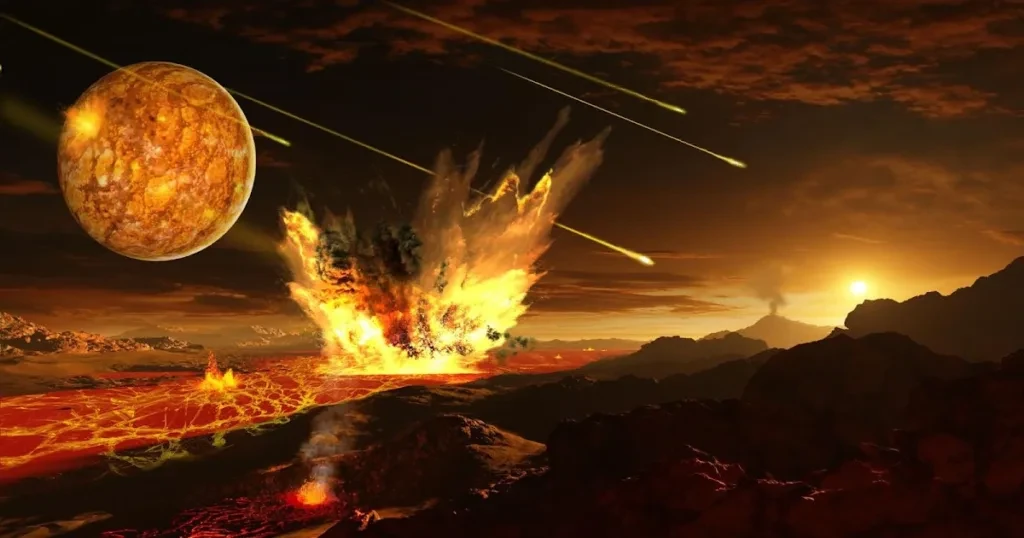
As best we understand the history of our planet, life arose during the Hadean period when Earth was hellish. If you traveled back there in a time machine, you'd die. There was no oxygen in the air, and the temperature reached 230°C (446°F), which is great if you want roast chicken, but not if you're holding out for chickens to evolve in the first place.
How did life arise on Earth?
It's a fascinating question and one that has challenged scientists for centuries.
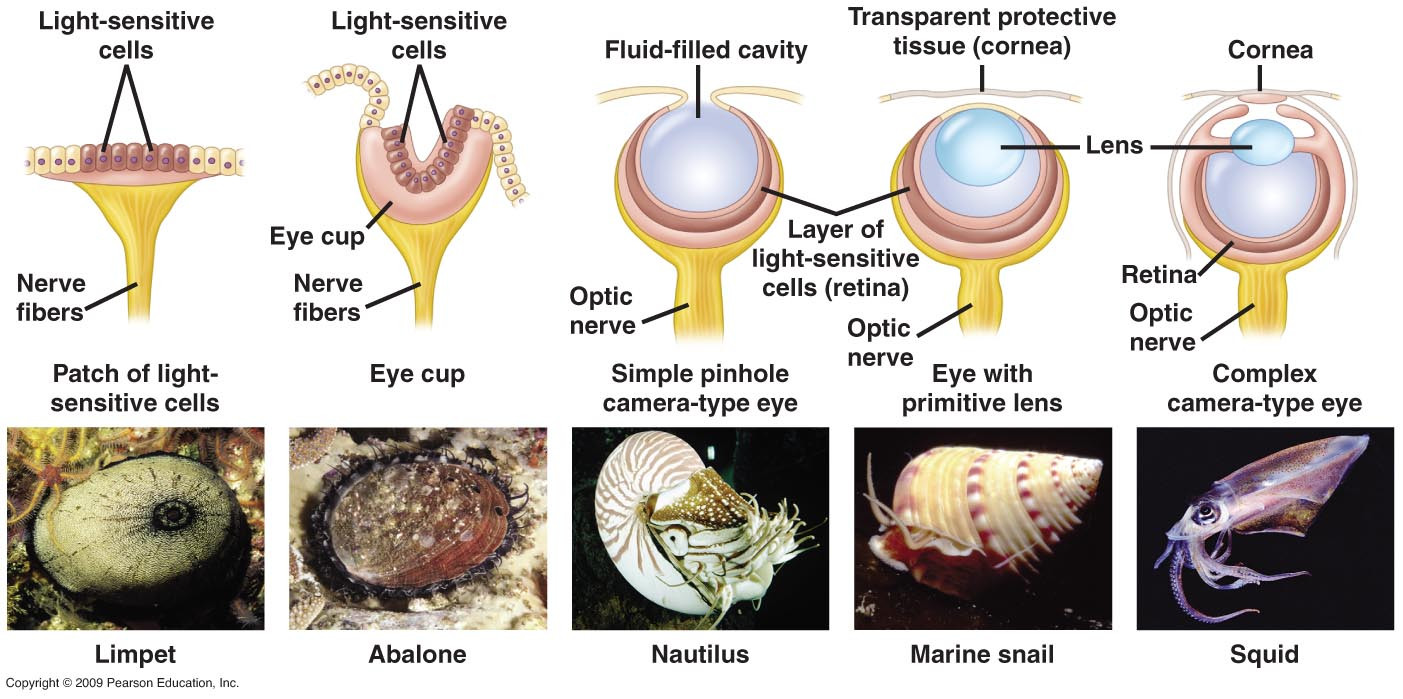
Traits like eyes, ears and brains evolved over hundreds of millions of years in gradual, incremental steps, with eyes evolving from light-sensitive pits to complex eyes like ours. And we can still see this today, spread across species like mollusks, where all the various stages still confer some kind of advantage to various subspecies.
Based on the way evolution works in gradual steps, slowly increasing in complexity, scientists have long thought that life would have originally arisen in much the same way, but the initial starting point is elusive. Complex life, like humans, has around 25,000 genes, but the simplest organisms need only 480 genes to survive. Even so, it's been difficult to imagine how those original 500 or so genes first arose as they all needed to be present at once.
And this is where the latest research is mindblowing...
Scientists have discovered a single strand of RNA that needs only 45 nucleotides to form a chain that is self-replicating. And it's important to be clear about our terms here. The simplest organism, Mycoplasma genitalium, needs 480 genes, but a single gene can have anywhere from several hundred to a thousand nucleotides within it and needs to work together with other components within a cell to replicate. It's estimated that Mycoplasma genitalium has over 500,000 nucleotides.
In this latest research, we are NOT talking about genes. We're talking about a single strand of RNA with no cellular support at all that is only 45 nucleotides long, and it's able to replicate and evolve. It's a staggering discovery named QT45, or Quite Tiny 45 nucleotides. Don't you love the understated simplicity of the name? Yes, it's quite tiny indeed.
Perhaps an analogy would help.
Imagine if aliens arrived on Earth today and they wanted to understand the origin of computers. We, humans, might consider EINAC, the computer developed shortly after World War II, as the starting point, or perhaps the Babbage analog computer in the 1800s, but this particular discovery is akin to finding an abacus! Aliens would examine it and recognize that, despite its simplicity, the abacus marked the first time any calculation had been made and that this laid the foundation for all modern computing.
In essence, scientists have demonstrated how easily the basic building blocks of life can come together. Rather than struggling to unravel the astonishing complexity of even the simplest of organisms with half a million nucleotides in their genome, we've discovered how the most basic strand of RNA (less than 50 nucleotides in length) can demonstrate the underlying mechanisms of evolution—self-replication and the ability to slowly adapt.
What about life elsewhere?
The implication of this research is that with (1) a moderate terrestrial planet, (2) a bunch of asteroids providing basic nucleotides, and (3) a few billion years, you should end up with us, or something like us (complex life), but we don't see that when we look out into space... or do we?
Recently, NASA announced that at least one of its samples collected by rovers on Mars cannot be explained using non-biological processes. That doesn't mean there is life on Mars, but it does mean we cannot readily explain the results using our current knowledge of planetary chemistry and geology. At the moment, the easiest explanation is life! Whether that holds remains to be seen, but it demonstrates how quickly we may go from only knowing about one planet with life to two!
It may be that QT45 occurred on Mars as well as Earth and led to life there before the planet dried up.
If life can potentially arise from a mere 45 nucleotides strung together, life may well be abundant throughout the universe. Perhaps it's just intelligent, technologically advanced life that's rare.